




DYNAMIC EVENTS LIMITED
EU NEWS
The pitfalls of lobbying the Commission (as a climate campaigner)
By MARI ECCLES
Tips, tales, traumas to influence@politico.eu | View in your browser
Hello and welcome to EU Influence! I’m Mari Eccles, enjoying this excoriating review of a global health conference from the normally mild-mannered The Lancet. While it’s about a specific event, the criticisms might ring true to Brussels conference attendees.
- “If you cannot find a woman panellist, it is probably because they do not exist.”
- “Throw in a youth panellist for a ‘fresh perspective’. Remind everyone they are just at the beginning of their career and cue them last, after the real experts have finished monologuing.”
- “Ask your friends! Panels are supposed to be fun, and obviously you are friends with leaders in the field, so this is a safe choice.”
On the menu this week:
— Why the Commission’s structure is making life harder for those trying to lobby the EU.
— EU exam organizers vastly underestimated how many people want to be a Eurocrat — hence the delay to your application.
— A dispatch from the launch of a report from consultancy KPMG and the China Chamber of Commerce to the EU.
INTENTIONALLY INTRICATE
COMMISSION’S TOO COMPLICATED: The way that the European Commission is structured in Ursula von der Leyen’s current mandate makes it harder for green campaigners to lobby the institution, according to advocates who spoke to EU Influence. Mike Walker, a lobbyist working largely on climate issues, told me over a coffee that the “structural ambiguity” of the College of Commissioners makes “targeted advocacy with limited resources a challenge for civil society.”
Where to go? “It is a combination of factors, possibly most simply put as not knowing at what level some decisions are being made at and by whom,” he said.
Pining for the old days: It hasn’t always been like this. In von der Leyen’s first mandate, it was fairly obvious who to go to if your focus was the climate: Green Deal architect Frans Timmermans and his team. Now Walker says it’s all a bit more ambiguous, thanks to portfolios being split across different commissioners and services. “Multi-layered murkiness,” is how he put it.
As well as the shared or broad portfolios — see, for example, Timmermans’ successor Teresa Ribera, who is also responsible for competition policy — there’s a perception from many that decisions are being made far more frequently at the very top.
Sven Harmeling, head of climate at the civil society organization CAN Europe, told us something similar. “Sometimes it’s not clear which DGs [directorates-general] are involved,” he said. “That creates challenges in terms of understanding where some of the discussions are.” Green lobbyists say that makes it even trickier at a time when they argue their access is more limited.
Case in point: The omnibus simplification proposal, which affected several climate-related groups, but which “basically cut off a lot of the normal consultation procedures,” Harmeling said. He added that the consultations “were rushed” and were “often only with a very select group of stakeholders.” It all fits into a broader political climate in which green policies have been superseded by competitiveness and security, argues Walker (and pretty much any climate campaigner you speak to these days).
Centralized system: Walker said that the problem was likely “aggravated by the clear focus of decision-making on VDL and her team.”
Out of the loop: That’s something flagged by Greenpeace’s farming lead Marco Contiero. “Decisions within the Commission happen in a much more vertical way, even compared to von der Leyen I,” he said. “The amount of people involved has shrunk, and I have staff in the cabinet of commissioners, as well as high-level fonctionnaires and directors, not knowing what’s coming.”
It’s not just green activists: The organization of the Commission is also bothering other NGOs trying to access or lobby the right units in the EU executive. A broad portfolio for equality commissioner Hadja Lahbib has also frustrated activists working in the human rights space, who say that her attention is captured more frequently by the other portion of her portfolio: crisis management.
In the dark: One person working at an NGO who spoke to Influence — granted anonymity to talk candidly about sensitive matters — flagged a recent initiative in the equality field that was scrapped without the knowledge of some high-level Commission staff.
The inverse effect: Industry perhaps has a slightly easier route into the Commission these days, given that it has its own commissioner. Indeed Stéphane Séjourné’s team put that to me in no uncertain terms when I asked them about meetings with businesses. “The fact that the commissioner in charge of the industry is meeting primarily the industry representatives seems a bit self-explanatory,” a member of his office retorted. Touché.
But, but, but: However, Harmeling did say that when it comes to the unit dealing with climate issues — DG CLIMA — “I cannot see a significant decline or worsening of the situation when it comes to working level discussion on specific legislative files.”
The European Commission didn’t respond to our requests for comment.
BREAKING INTO THE BUBBLE
EVERYBODY WANTS TO BE A EUROCRAT: 100,000 more people applied to take a test that could get them an EU job than anticipated, the head of the European Personnel Selection Office told lawmakers this week. Olivier Salles of EPSO told MEPs in the pensions committee on Wednesday that the huge number of applications for the hiring competition — a whopping 174,000 — was a “surprise for all,” including the EU institutions, national governments and exam organizers.
Desperate to get in: This year’s hiring competition, which closed in March, was the first time in seven years that generalist applicants, rather than specialists in areas such as HR, finance and law, had a chance to apply for EU jobs at AD-5 grade.
Over-subscribed: The demand creates “huge challenges,” Salles said. “We had anticipated a potential number of candidates, of around 55,000-60,000, so we have three times that.”
Summer revising: It also means that anyone hoping to take the test will do so “probably in October,” rather than before the summer as initially hoped, he said. The additional demand meant it was unlikely that the tests could be run in a “stable and secure” way before the fall.
Mark your calendars: Successful candidates will probably find out in October 2027, he added.
Not impressed: MEPs had little sympathy for the organizers. Peter Agius, a European People’s Party lawmaker, said it was “embarrassing” to speak with people in his native Malta who had their test canceled after “quite shameful” technical problems.
Damaging: EPSO cock-ups have “tarnished the image of the European Union,” said Murielle Laurent, a French Socialist MEP. She also argued that EPSO’s failure to prepare candidates (although that’s not part of its mandate) discriminates against candidates who might not be able to afford pricy external prep providers.
CONSULTANCY CORNER
SCOOP!: Covington has snapped up two major names for its public policy practice: Dita Charanzová, a former vice-president of the European Parliament, and Zeger Vercouteren, former vice-president for government affairs and policy at Johnson & Johnson EMEA. They’ll join a team that includes former Swedish Prime Minister Carl Bildt, former EU Commissioners Elżbieta Bieńkowska, Cecilia Malmström and Andris Piebalgs, and former ambassadors Péter Balás, Jean De Ruyt and Thomas Reilly.
NEW BRITCHAM PRESIDENT: James Stevens, Rud Pedersen’s managing partner, just got elected as the new president of the British Chamber of Commerce to the EU. Announcing it, he said: “It’s time for business to stand tall and speak loud if Europe is to succeed,” adding: “We can be euro-wimps no longer.”
TRANSATLANTIC EXPANSION: Bully Pulpit International, a Washington-HQ’d media and communications agency, is expanding in Europe, having announced the acquisition of the German consultancy 365 Sherpas. The latter is a strategic comms specialist which focuses on agriculture, banking, energy and healthcare, and has seven staff in Brussels and more than 40 in Berlin.
FANCY ANOTHER ONE?: H/Advisors, a strategic comms advisory group owned by Havas, is also expanding its public affairs office in Brussels, it has just announced. It’s merging its German and Iberian outfits (H/Advisors Gauly and H/Advisors Acento, respectively) and it is set to be chaired by former Spanish diplomat Maria Lledo, who joined H/Advisors Acento in 2024. She’ll team up with Vanessa Haumberger, the managing partner at H/Advisors Gauly, who will also take on the role of chief strategy officer for H/Advisors Brussels. Lledo said: “In Brussels, influence is not improvised — it is anticipated, structured and deployed at the right moment,” adding: “This is an environment where complexity and speed go hand in hand.”
CLIMATE’S OVER: The Tony Blair Institute says Europe must shift away from a “climate-first, climate only” approach to energy, in a missive published earlier this week.
Wheeling out the big guns: TBI, current home of many a former prime minister, published the call — signed by Tony Blair himself and former Italian leader Matteo Renzi — for European countries to prioritize supply and affordability. National moves in Europe to phase out fossil fuels have left the region more vulnerable during unstable geopolitical times, the pair warned.
|
CYBER-FEARS (BUT IN STYLE): The China Chamber of Commerce to the EU chose a glitzy backdrop for a presser on the Cybersecurity Act, top trade colleague Carlo Martuscelli writes in. Chinese business bigwigs lamented the potential billions of euros of damages that would result from excluding Chinese suppliers from European infrastructure.
They did so in the wood panelled, neo-Baroque hall of the University Foundation (designed by architect Ernest Jaspar, most famous for designing Cairo’s Heliopolis suburb).
Call for fairness: KPMG’s China branch co-authored the report. The global consultancy hewed close to the Chinese government’s official messaging in its presentation. “Security shouldn’t come at the cost of efficiency, fairness and competitiveness,” said Cai Wei, chief strategy officer for KPMG China. He encouraged the EU to “return to technical neutrality.”
Spotted: Liu Jiandong, chairman of the CCCEU and chairman of Bank of China (Europe); Liang Linlin, director of communication and research, CCCEU; Philip Blenkinsop, Reuters.
POLICY SHOP
COMMISSION RESPONDS TO HEALTH ORGS’ OMBUDSMAN COMPLAINT: The European Commission has given agri colleague Lucia Mackenzie its reply to health organizations’ complaints that they were not sufficiently consulted in the run-up to the presentation of the EU Wine Package.
Parallel conversations: A Commission spokesperson highlighted that “stakeholder organisations” were invited to the first meeting of the High-Level Group on Wine Policy.
Which stakeholders?: When you look at the agenda and invite list of that meeting, all of the external organizations present were representatives of wine growers, farmers, and the wine industry.
The justification: Those discussions “focused on the sector’s production and how to address market imbalances … not on the health aspects of wine consumption,” the Commission spokesperson wrote to Lucia.
Urgent issue: A staff working document accompanying the wine package acknowledged the “ad hoc” consultation process adopted and said that the “urgency of the situation meant that it was not possible to conduct the more usual, wider consultation process.” Nonetheless, the document continues, this process “encompassed anyway all the representative EU stakeholders of the sector.”
Nothing to see here: The Commission spokesperson reiterated that the “Commission upholds the highest standards of good governance, transparency, inclusiveness, and accountability. The Commission ensures that EU policies remain evidence-based, notably thanks to a variety of consultation activities with stakeholders.”
TOBACCO LOBBY WADES IN ON SFDR: Tobacco lobby groups Unitab and Fetratab are campaigning for changes to the Council’s position on the Sustainable Finance Disclosure Regulation review, complaining about “blanket sectoral exclusions, including the exclusion of tobacco cultivation and production, from eligibility for sustainability-labelled financial products” in a letter to ambassadors and attachés.
What they want: Kathryn Carlson writes in to say that the lobby groups are pushing for all sectoral exclusions to be removed from the SFDR update, “except for activities already prohibited under international law.” So cigarette manufacturers could be eligible to be included in funds labelled as green, but chemical weapons makers not so much.
MORE FROM THE OMBUDSMAN
CATCH-22: Ensuring the public (and journalists!) get access to documents that they request is “a problem that is too big to be solved by my office alone,” the EU’s Ombudsman Teresa Anjiho has said. In a meeting with MEPs on Wednesday, she called (once again) for the European Commission to reopen access to documents regulation, saying that’s the key way of actually getting the Commission to hand over the info that is asked of it.
We reached out to the Commission to ask if a revision of the regulation was on the cards, but have yet to hear back.
INFLUENCERS
CONSULTANCIES
Jacob Moroza-Rasmussen is standing down as director of Panterra in June.
There’s a whole load of moves at Red Flag: Lila Quaile joins as an account manager from Euros Agency, while Laura Gherman arrives from Burson as account executive and Paula Meissner arrives in Brussels as account coordinator.
The company has also promoted Shane McCarthy to senior account manager and Florian Bikard to account manager.
Red Flag has also promoted Roxana Moldovan to senior account director and Elliot Tricot as account director.
Elisa Galli has joined Fourtold as a Consultant in EU Health Policy and Public Affairs
NGOs
Joop Hazenberg has joined CISL – Cambridge Institute for Sustainability Leadership, in their Brussels office, where he will be leading the strategic programmes shaping the EU Clean Industrial Deal, including ETS reform. He was previously EU Director of the Carbon Capture and Storage Association.
INSTITUTIONS
Andreas Stein, who was appointed head of the Commission’s data protection unit in the Commission’s justice department (DG JUST) in February, will become director for justice policies within DG JUST, taking over from Peter Csonka when he retires.
Julien Mousnier, the DG JUST director of rule of law, fundamental rights and democracy (where the data protection unit sits) has moved to Commission President Ursula von der Leyen’s cabinet as senior adviser. Marie-Hélène Boulanger is acting director for now.
HEALTH
Health NGO Doctors Without Borders (MSF) has appointed Kris Torgeson as the new executive director of its access to medicines division from September.
Thanks to Carlo Martuscelli, Paul de Villepin, Sarah Wheaton, Kathryn Carlson, my editor Paul Dallison and producer Mert Turan.
SUBSCRIBE to the POLITICO newsletter family: Brussels Playbook | London Playbook | London Playbook PM | Playbook Paris | Berlin Playbook | POLITICO Confidential | Sunday Crunch | EU Influence | London Influence | Berlin Bulletin | D.C. Playbook | D.C. Influence | Canada Playbook | POLITICO Forecast | All our POLITICO Pro policy morning newsletters
This email was sent to martin@dynamiceventsmalta.com
Update your preferences | Unsubscribe from this email | Unsubscribe from all emails
POLITICO SRL · Rue de la Loi 62 · Brussels 1040 · Belgium
By GABRIEL GAVIN
PRESENTED BY
![]()
Send tips here | Contact us on X @gerardofortuna @NicholasVinocur | Listen to Playbook and view in your browser
GOOD MORNING — I’m Gabriel Gavin, bringing you this Friday edition of Playbook bright and early after last night’s late-running informal summit of presidents and prime ministers here in Brussels.
DRIVING THE DAY:
THE TRUMP PLAYBOOK: The European Union may have averted one transatlantic crisis this week but has already started thinking about the next. That was the message from diplomats, officials and politicians in the early hours of this morning, after leaders held a five-hour working dinner in the European Council building on how to handle an increasingly volatile U.S. President Donald Trump.
EU countries want to avoid a repeat of the Greenland crisis but they’re split on how to do it. Some — like France, Belgium and Spain — credit the EU’s joint position, pledge of retaliation and market-sinking trade-war fears with fending off Trump. Others, like the Baltics and Poland, say NATO Secretary-General Mark Rutte’s strategy of flattering the U.S. president was what averted disaster.
Die is cast: The one thing they can all agree on is that there can be no going back. As Zoya Sheftalovich and Nicholas Vinocur report this morning, Trump’s fighting words on Greenland have had a profound impact on the EU and the bloc’s view of its U.S. frenemy. “This is the Rubicon moment,” said an EU diplomat from an eastern flank country. “It’s shock therapy. Europe cannot go back to the way it was before.”
**A message from Broadcom: “As a European cloud provider, partnering with Broadcom allows us to compete effectively by combining industry-leading VMware technology with the sovereignty guarantees our customers demand. We deliver innovation, security, and jurisdictional independence—proving that European digital autonomy and technological excellence aren’t mutually exclusive.” – EMEA cloud solution provider, ITQ**
Illusory TACO: The consensus is that if Trump has threatened his NATO allies once, he can do it again. “The fact there are no tariffs from February is a positive development but we have to be prepared for Donald changing his mind,” said one diplomat after the preparatory meeting of ambassadors earlier in the day. “Nobody said TACO. Nobody thinks this is him chickening out. It’s de-escalation, but we have to be prepared for him changing his mind.”
Standing firm: It was Commission President Ursula von der Leyen who best articulated the mood. “We followed four key principles: firmness, outreach, preparedness and unity. And it was effective so going forward we should maintain this very approach,” she said.
New vibe: Another EU official familiar with the discussion agreed: “There was a clear change of mood in the room. The discussion among the leaders made clear that when a situation like the one that occurred a few days ago happens, a calm but quick and firm response is needed and it works.”
Thursday’s summit was initially convened to work out a retaliatory response to the threat of new U.S. tariffs, which were to have been imposed from Feb. 1. With the tariffs no longer on the table, the meeting was quickly overshadowed by the need to understand what deal, if any, had been struck between Trump and Rutte over Greenland.
What we know: Two officials told my colleagues Nette Nöstlinger and Jacopo Barigazzi that the proposed four points sketched out by Rutte centered on the renegotiation of a 1951 U.S. defense agreement and a broad promise by European governments to step up Arctic security. This could include adapting the original agreement for a “golden dome” — Trump’s proposed future missile-defense system. It could also include a provision for what would happen if Greenland obtained full independence from Denmark.
U.S. access: The proposals could also include extended U.S. military access to the island, along with a broad promise by European governments to increase their contribution to security in the region, including a potential NATO mission.
Aspirational goals: Some diplomats suggested the third and fourth points of the proposal may be, for now at least, more wishful thinking than firm commitments. Those points are: An understanding that the U.S. and EU won’t place further tariffs on each other; and the establishment of a supervisory body to monitor exploration rights, to prevent another major power, such as China or Russia, from winning the race for Greenland’s resources.
Danish Prime Minister Mette Frederiksen, who had complained of being cut out of the conversation, will meet Rutte at NATO headquarters for a working breakfast this morning to discuss the situation, a national official told POLITICO.
Hush hush: Two diplomats, who were granted anonymity to speak freely about the sensitive talks, said those who — like Council President António Costa — have had personal readouts from Rutte about the details of what Trump was offered are cautious about sharing information too widely. They are keen to avoid leaks and speculation.
No hostility: “I still treat United States as our closest friend,” said Lithuanian President Gitanas Nausėda on arrival at the meeting, adding that it was a mistake for Brussels to even contemplate using the so-called trade bazooka against an ally. A diplomat from a more cautious country said EU members broadly agreed on how to handle the crisis. “The question is one of tactics. Do you walk in wielding a big stick now, or do you do it later?” the diplomat said.
“Hysteria”: In Davos, U.S. Treasury Secretary Scott Bessent told POLITICO’s Dasha Burns that the Europeans had been wrong to stand up to Washington (he would say that, of course). “The hysteria level that hit here was just out of control — driven by the media, driven by this European hand-wringing,” Bessent said in the interview. “It was completely out of control.”
The EU’s plans to diversify away from America and reduce the bloc’s exposure to Trump’s whims will face another critical moment next month when leaders gather at a castle in rural Belgium to discuss strategic autonomy — though with this president, it’s entirely possible they’ll be tested again before then.
NOW HEAR THIS: On the EU Confidential podcast, we recap the summit — and the week that was. Host Sarah Wheaton is joined by Zoya, Nick and Tim Ross.
PLAYING POLITICS
RUNNING OUT OF STEAM? Ursula Von der Leyen has survived her fourth motion of censure in seven months by a wide margin.
On paper, the Commission president’s support is growing — drawing more and more votes in her favor each of the four times a no confidence motion has come up. A total of 390 lawmakers backed her Thursday, suggesting MEPs are growing weary of the far right repeatedly tabling censure motions. Or perhaps they are unwilling to destabilize the EU at a time when Europe is engulfed in multiple crises.
What helped: The fact it was a far-right motion means dissatisfied lawmakers from the center and left sides of the hemicycle voted against it. The other factor is that the European People’s Party (EPP) this week introduced tougher punishments for those breaking the party line in such votes, which dissuaded some EPP lawmakers critical of von der Leyen from voting against her.
But but but … even those rules did not prevent five EPP lawmakers from voting against von der Leyen or abstaining. As a result, for the next six months they will likely be banned from speaking in the hemicycle and from leading negotiations in any legislative file or resolution. The MEPs are: the Netherlands’ Jessika van Leeuwen and Sander Smit; Romania’s Loránt Vincze and Iuliu Winkler; and Slovenia’s Milan Zver.
MERCOSUR CONTROVERSY LOOMING: The Commission is now weighing up whether to provisionally apply the Mercosur agreement — despite Parliament voting to freeze its ratification of the trade deal with South American countries and send the text for legal review. If it were to go down this path, it could trigger another backlash if lawmakers see the executive as bypassing Parliament’s decision. This could trigger a fifth motion of censure against the Commission — this one supported by anti-Mercosur MEPs from all political groups.
Inside the Mercosur muddle: For weeks, now, the Commission had been expecting Parliament to send the Mercosur deal for a legal review and it undertook a concerted lobbying campaign to ensure it didn’t happen, Max Griera reports. This included asking heads of government to call lawmakers. The campaign ultimately failed, as domestic political pressures carved deep fault lines in the Parliament’s political groups and triggered massive infighting within Europe’s centrist party ranks.
DID METSOLA JUMP THE GUN? Meanwhile, MEPs from the Socialists and Democrats (S&D) and the liberals of Renew Europe are annoyed that the EPP’s Roberta Metsola, the assembly’s president, didn’t coordinate with them on committing to unfreeze the EU-U.S. trade deal ahead of meeting leaders on Thursday.
Angry allies: An S&D official said Metsola did not consult with the second-largest group after POLITICO reported she was coming under pressure to smooth the passage of her decision. “The EPP is the only one exerting pressure” to unblock the U.S. trade deal, the official added. No Renew official could confirm consultation had taken place.
Pressure is huge. Now that Trump has toned down his tariff threats, it’s highly unlikely that the Parliament will move to freeze the next steps of the deal. Lawmakers from the trade committee are now expected to formalize the decision on Monday.
![]() |
MIGRATION MOMENT
CALL TO BEEF UP MIGRATION RESPONSE: The role of Frontex and Europol in the EU’s approach to migration has to be strengthened, according to Marie-Pierre Vedrenne, France’s minister delegate to the interior minister. Speaking with Hanne Cokelaere in Cyprus, Vedrenne said she wasn’t calling for the agencies to “completely change their mandate” but simply to reinforce what works well and to engage with countries of migration departure and transit.
Tough talk: While those in Nicosia for Thursday’s Justice and Home Affairs Council were working through a lunch of souvlaki and stuffed vegetables, ministers were discussing how to return people to Syria and Afghanistan. “It’s a delicate subject — a difficult one, but it’s a necessary one,” Belgium’s Migration Minister Anneleen Van Bossuyt told reporters. In a letter to European Migration Commissioner Magnus Brunner last year, Belgium and 19 other countries called for a joint European approach to voluntary and forced returns to Afghanistan.
Sweden wants a shift: Sweden’s deportation policy is focused on people who’ve committed crimes but faces difficulties including missing paperwork, a lack of political cooperation with the Afghan Taliban regime, trouble identifying people and difficult and expensive flights, Sweden’s Migration Minister Johan Forssell told a group of journalists at an impromptu presser. He called for an action plan: “One way or another, there must be a shift.”
Levers to pull: As the EU looks for leverage to get third countries to accept returns, Forssell said his country favors also including development cooperation on an EU level — “but we’re not really there yet … Our experience is quite simple, and that is that money talks.”
UNABLE TO REUNITE: Ukrainians serving prison sentences in Russian-occupied territory, and those forcibly abducted by Russian forces, are being left unable to enter the EU as a result of the bloc’s new Schengen Information System, risking being flagged as potential threats to public order and internal security. It has left some prisoners unable to rejoin loved ones abroad after gaining back their freedom.
Fairness warning: “We should be very careful not to treat Ukrainians from temporarily occupied territories as a security threat by default,” said Thijs Reuten, a Dutch center-left MEP and the European Parliament’s shadow rapporteur on Ukraine. Ekaterina Bodyagina has the full investigation.
IN OTHER NEWS
WHILE YOU WERE SLEEPING: U.S. President Donald Trump said the U.S. has sent an “armada” of warships toward Iran but hoped he would not have to use it, as he renewed warnings to Tehran against killing protesters or restarting its nuclear program. Reuters reports the USS Abraham Lincoln aircraft carrier and several guided-missile destroyers will arrive in the Middle East in the coming days.
FRESH UKRAINE TALKS: Russia has announced it will hold security talks with the U.S. and Ukraine in Abu Dhabi on Friday, Reuters reports. However, the Kremlin has warned that unless territorial issues can be resolved, a durable peace would not be possible.
Zelenskyy clap-back: Ukrainian President Volodymyr Zelenskyy didn’t mince his words when he spoke at Davos Thursday, accusing Europe of dithering in its support against Russia, and of preferring words over action. This prompted a sarcastic English-language post on X from Hungarian Prime Minister Viktor Orbán, who listed the reasons why Hungary “cannot support your war efforts.”
No love lost: “The Ukrainian people, of course — despite your carefully chosen insults — can still count on us to continue supplying your country with electricity and fuel, and we will also continue to support refugees arriving from Ukraine,” Orbán said.
BORED OF PEACE: Trump’s plan to end wars is turning to a group of some of the world’s most warlike leaders — including Vladimir Putin and Aleksandr Lukashenko. In his weekly Declassified humor column, my colleague Paul Dallison asks: What could possibly go wrong?
Non-invitation: On Thursday, we said Denmark had confirmed it wouldn’t participate in Trump’s Board of Peace. Today, it may be worth pointing out that the Danes weren’t actually invited in the first place. Read the details in a statement put out by Foreign Minister Lars Løkke Rasmussen.
Meanwhile, Canada’s invitation to join “what will be, the most prestigious Board of Leaders ever assembled, at any time” was publicly rescinded by Trump himself.
STUDIO SHOWDOWN: A bitter battle over Warner Bros. Discovery, which is pitting Netflix and Paramount against each other in a $82.7 billion buyout bid, is becoming a problem for the EU. After Warner accepted the Netflix bid, Paramount has met with the European Commission Directorate-General for Competition, Francesca Micheletti and Mari Eccles report.
JUST IN TIME: TikTok announced overnight it had closed a deal establishing a U.S. subsidiary of the platform to avoid a ban, with new owners including the U.S. private equity firm Silver Lake, Abu Dhabi-based artificial intelligence company MGX and Oracle, the tech giant co-founded by Larry Ellison, an ally of Trump. The deal allows TikTok’s Beijing-based parent company, ByteDance, to maintain a nearly 20 percent stake. Our U.S. colleagues break down everything you need to know about the deal here.
MOVE OVER FRANCE: The infamous Franco-German engine has competition — from Rome. Italian Prime Minister Giorgia Meloni and German Chancellor Friedrich Merz appear set on sharing control of the EU’s economic agenda together, in what has become the bloc’s newest power couple.
Can’t get enough of each other: Officials from Meloni’s office told Jacopo Barigazzi that the right-wing prime minister met with Merz privately ahead of last night’s summit. And that’s not all — the pair will sit down today in Rome to sign a string of partnership agreements that could see Paris sidelined, according to our top team of reporters.
AGENDA
— World Economic Forum in Davos. Panel on Global Economic Outlook with European Central Bank President Christine Lagarde at 11 a.m. Watch live coverage on WEF’s Youtube channel.
— Coreper I meeting at 10:30 a.m.
— European Parliament President Roberta Metsola receives the President of Ecuador Daniel Noboa at 11:00 a.m.
— Denmark’s PM Mette Frederiksen meets NATO Secretary-General Mark Rutte.
— German Chancellor Friedrich Merz and several federal ministers are in Rome for German-Italian consultations. Merz meets Italian PM Giorgia Meloni bilaterally.
BRUSSELS CORNER
WEATHER: High of 9C, overcast.
SPOTTED … at POLITICO’s annual party at Davos: Former head of MI6 Richard Moore; EU Ambassador to the WTO João Aguiar Machado; MEPs Brando Benifeiand Lukas Sieper; European Innovation Council board member Ann Mettler; Bruegel Director Jeromin Zettelmeyer; CEPS CEO Karel Lannoo; Club of Rome Honorary President Sandrine Dixson-Declève; Robert & Ethel Kennedy Human Rights Center President Kerry Kennedy; Voto Latino co-founder María Teresa Kumar…
Along with … Bayer VP Helga Flores Trejo; TikTok’s Paolo Ganino; Vast CEO Max Haot; Barclays’ Germany CEO Ingrid Hengster; Bridgewater Co-Chief Investment Officer Bob Prince; PhRMA CEO Steve Ubl; Edelman President International Ed Williams; Weber Shandwick’s Greg Prager; FGS Global Partner Sebastian Vos; Holcim VP Cédric de Meeus; S&P Global/CERAWeek leaders James Rosenfield and Louis Carranza; Schneider VP Justin Saia …
And breathe … Euronews Chair Pedro Vargas David and CEO Claus Strunz; Handelsblatt editor-in-chief Sebastian Matthes; Business Insider editor-in-chief Moritz Seyffarth; Agencia EFE editor-in-chief José Manuel Sanz Mingote; Foreign Policy CEO Andrew Sollinger; POLITICO alums Ryan Heath and Matthew Kaminski; and POLITICO’s Cally Baute, Jamil Anderlini, Justine Lore, Dasha Burns, Anne McElvoy, Jamie Dettmer, Peter Snowdon, Kathryn Carlson, Gordon Repinski, Cristina Gonzalez, Sveva Berti, Mona Marsti and Mariona Espín.
LIFTING THE CUP: After days of tense voting, the Brussels bubble has crowned a winner in the EU Cafe Cup, naming the best spot for a coffee in the European Quarter. Playbook can reveal that Greek chain To Meli’s branch on Frère-Orban Square will be handed a trophy today, beating Schuman Roundabout’s Papillon to the top spot after more than 15,000 people cast ballots online.
FIRST STRIKE OF THE YEAR: Train connections across Belgium will be disrupted due to a strike from Sunday until Friday.
AMERICANS KEEP CLEAR: The U.S. Embassy in Brussels has warned its citizens to avoid demonstrations being held today and Saturday outside its embassy compound. Two separate protests are planned, first by a legal rights group and then by the Venezuelan diaspora.
BIRTHDAYS: MEP Jörgen Warborn; former MEP Sylvia-Yvonne Kaufmann; Sweden’s former PM Magdalena Andersson; European Investment Bank Vice President Nicola Beer; Senior Vice President of Policy and Director General for Europe at ITI Guido Lobrano; BDO’s Noel Clehane.
Celebrating Saturday: MEPs Evelyn Regner, Fernando Navarrete Rojas, Valentina Palmisano, Julie Rechagneux and Milan Mazurek; former European Commissioner Violeta Bulc; former MEP Neoklis Sylikiotis; Renew Europe’s Daniel Tanahatoe; Maria Elena Boschi, member of the Italian chamber of deputies and POLITICO 28 alum; Moon Jae-in, former president of South Korea.
Celebrating Sunday: MEP Ryszard Czarnecki, Merja Kyllönen; former MEP Roger Helmer; Ukrainian President Volodymyr Zelenskyy; former French PM Jean-Marc Ayrault; Copa Cogeca’s Niall Curley.
THANKS TO: Camille Gijs, Victor Jack, Zoya Sheftalovich, Hanne Cokelaere, Nette Nöstlinger, Kathryn Carlson, Tim Ross, Playbook editors Alex Spence and James Panichi, reporter Ferdinand Knapp and producers Dean Southwell and Hugh Kapernaros.
**A message from Broadcom: Europe’s competitiveness depends on digital infrastructure organisations can trust. For European businesses, governments and public sector entities – especially in the AI era – that means secure, resilient, and sovereign cloud alternatives that give them control of their data. The solution isn’t protectionism or settling for legacy technology. At Broadcom, we are proud to invest in our European cloud service provider partners precisely because we believe they can win – not just survive. VMware Cloud Foundation gives them the technology backbone to achieve hyperscaler-level efficiency and scale, without vendor lock-in and while keeping data entirely within the jurisdiction of the European Union. Developing a local cloud industrial base matters for Europe’s economy. These cloud service providers create high-skilled jobs, keep revenue in Europe, and offer genuinely sovereign alternatives for Europe’s innovative organisations. They deliver the infrastructure needed to realise Europe’s AI ambitions, without compromise.**
SUBSCRIBE to the POLITICO newsletter family: Brussels Playbook | London Playbook | London Playbook PM | Playbook Paris | EU Election Playbook | Berlin Playbook | Global Playbook | POLITICO Confidential | Sunday Crunch | EU Influence | London Influence | Berlin Bulletin | Living Cities | D.C. Playbook | D.C. Influence | Canada Playbook | All our POLITICO Pro policy morning newsletters
SOURCE: POLITICO
Good Friday morning. This is Andrew McDonald.
DRIVING THE DAY
BREXIT, FIVE YEARS ON: It feels now like a distant memory. But on this day five years ago, the slogans, campaigns, meaningful votes, Cooper and Grieve amendments and elaborate Chequers/Malthouse/Super Canada plans that consumed our politics for so long culminated in the U.K. finally leaving the European Union — to the (recorded) bongs of Big Ben. Westminster’s dictionary has moved on now to missions, milestones, steps and foundations. But the Brexit tune is still playing softly in the background, its lasting effect on British life plain to see … even if Keir Starmer doesn’t want to talk about it.
A stroll down memory lane: Cast your mind back to Playbook on the morning of Jan. 31, 2020. Boris Johnson and his Cabinet met in Sunderland for a day of “deliberately muted celebrations” to mark the start of the frenetic 11-month transition period that would culminate in a trade deal. Johnson would later declare the moment a “dawn of a new era” (yep, turned out true) and the beginning of “real national renewal” (debatable).
And in the opposition: Some Labour leadership contender called Keir Starmer responded “yes, of course,” when asked by some Lobby hack whether he would bring back freedom of movement for EU citizens if he ever became prime minister. Whatever happened to that guy?
**A message Goldman Sachs: Global analysis on the economic trends shaping 2025. Goldman Sachs economists and strategists share insights on the key factors driving the global economy. What to expect: Market-by-market, region-by-region, sector-by-sector analysis for the year ahead. Read the reports.**
But just weeks later … the runaway Brexit train was finally derailed in the news agenda by a Covid-19 pandemic that claimed the lives of millions across the globe. The story never fully got back on the rails since, with Johnson making way for two further (doomed) Conservative prime ministers before Labour swept to power with a landslide … and then discovered how hard the whole government thing is.
Where are they now? Brexit-consumed PMs David Cameron and Theresa May are in the Lords, alongside Vote Leave’s Matthew Elliott and negotiator David Frost … Boris Johnson and Michael Gove are back in the journalism game … Dominic Cummings is angry blogging again, while still fancying another crack at upending British politics … ex-No. 10 Director of Comms Lee Cain runs an advisory firm … former Brexit secretaries David Davis and Steve Barclay are enjoying the opposition life while Dominic Raab advises the, err, “World Gold Council” … “Mr. Brexit” Donald Trump is, well, you know that one … Mark Francois is a shadow defense minister … Steve Baker has gone skydiving … and Vote Leave Chair Gisela Stuart has ended up in charge of the interview process to appoint a sherpa to help renegotiate the Brexit settlement. Funny how these things turn out.
And on the other side: Ex-Chancellor Philip Hammond is in the Lords … David Gauke stood as an independent and is now leading a sentencing review for Labour … Dominic Grieve stood as an independent, too … Anna Soubry backed Labour and is back to criminal law … Our Future Our Choice activists Will Dry and Lara Spirit regenerated into a Tory plotter and top Lobby journo respectively … EU negotiator Michel Barnier managed to last the length of two Liz Truss premierships as French PM until being forced out in December … his sparring partner Olly Robbins is the top civil servant in the Foreign Office … legal warrior Gina Miller runs a very unsuccessful political party … and you probably know what happened to the shadow Brexit secretary who pushed for a second referendum.
It ain’t over till it’s over: Despite all the change, the future of what Britain looks like outside the EU is a very open question. We’ve entered a new phase in which Starmer is seeking a closer relationship with Brussels, and he will meet the 27 EU leaders on Monday as the first British leader to attend the informal gathering since Brexit.
To state the obvious: Starmer — who has nothing public-facing on the agenda today — won’t be saying anything today to mark the anniversary. Which leaves the other prime ministerial contenders and pretenders space to claim a slice of the limelight.
The survivor: Of those most involved in angling for Britain’s departure from the EU, Nigel Farage is one of the few who remains a truly central figure in Westminster. The Reform UK leader will be back on telly screens later with a carefully-timed speech at a rally in Tory Leader Kemi Badenoch’s constituency from 7 p.m. (and lots of interviews). As you might expect, Farage — like many of his fellow Brexiteers — isn’t altogether pleased with how things have turned out. He told his GB News show last night he is “disappointed in the way it’s been delivered.” Just wait ’til you get to the Remainers.
The rally was originally organized … to rub it in Badenoch’s face after she claimed over Christmas that Reform was inflating its membership numbers. A few hundred Reform members mostly drawn from Badenoch’s constituency will gather to hear their leader speak, before posing for a big group pic together. “We’re confident we have more members in North West Essex than the Tories do,” a Reform official quipped.
Also on the Faragenda: The potential cancelation of some local elections due to council reorganization — which Reform centered its latest party broadcast around — and Priti Patel, who earned a swift rebuke from her party leader for offering *that* defense of Tory immigration policy in her Thursday Sun interview. The shadow foreign secretary opted for a Badenoch-ian clarification last night, claiming she actually said she was “not happy” about the high immigration numbers while the Tories were in government.
And it’s true … that Patel said in the interview she was “not fine” with the big rise in immigration. But she also insisted she didn’t mislead voters who were told Brexit would lead to a reduction in immigration (it didn’t), defended her points-based system and said it was “totally distortionary” to suggest the government she served in had thrown open the U.K. borders. Shadow Home Secretary Chris Philp has the hospital pass of the morning broadcast round for the Tories — timings below.
Getting in on the act: The Lib Dems are sending out Ed Davey to play football and chat about Brexit. He’ll be having a kickabout with some cops and “at-risk youth” in the southwest, with a pool clip expected at noon. He reiterated his (once arch-Remoaner) party’s call for a new U.K.-EU customs union deal in his overnight comments marking the Brexitversary.
Now grab some overpriced booze and read this: POLITICO’s Sophie Inge has a fun read on how Rishi Sunak’s promise of a Brexit-bonus “radical simplification” of Britain’s alcohol taxes hasn’t quite turned out that way.
And this: Weeks before Germany’s election, the BBC is reporting this morning that opposition CDU leader Friedrich Merz will propose legislation on immigration that is designed to stop the far-right AfD owning the narrative … but could end up passing with its help. Chancellor Olaf Scholz called it an “unforgivable mistake.” It feels like a long time since former CDU leader Angela Merkel held out from letting Britain have more immigration carve-outs ahead of the Brexit vote in 2016.
HOSTILE ENVIRONMENTS
NEVER-ENDING TURBULENCE: The tremors over the government’s push for a third runway at Heathrow continue, with the Telegraph’s Ben Riley-Smith reporting that Climate Secretary Ed Miliband voiced his concerns about the expansion at Cabinet on Tuesday. Spokespeople for Miliband and No. 10 didn’t deny the claim, pointing to the usual no comment on what was discussed in Cabinet — but it’s another awkward story for the government as it looks to present a united front on the push for growth.
Luckily enough: Someone who was in the Cabinet room and will know exactly what Miliband said is on a visit today — and taking questions from environment hacks who’ve spent the last few days thinking about little except Heathrow. Environment Secretary Steve Reed is off on a visit to the Royal Geographical Society this morning, where he’ll speak from 10.30 a.m. to farming groups, landowners and more as he launches a “national conversation” on land use.
Conservation, conversation, consultation: What Reed’s announcement means in practice is a consultation for a new land use framework, aimed at better managing the country’s landscape given climate change and the growing population. Reed will say the highest quality agricultural land will remain protected for food production — but that ministers will also be looking at how and where land can be used for the likes of solar farms and (growth-friendly) reservoirs. The Telegraph splashes on that bit, reporting Reed will say more than 10 percent of farmland will be axed for net zero projects and protecting wildlife.
But I don’t let them tell me what to do: Reed’s allies pushed back on the Telegraph story as a “misrepresentation” last night. To head off even more ill-feeling from farmers toward this government, Reed will insist today that his new framework, when it comes, “will not tell people what to do.”
After that … the environment secretary will take questions from environment hacks, and then sit down with Channel 4 for a lengthy interview. Expect plenty of refusals to talk about private meetings, etc.
Also on the government grid: Policing Minister Diana Johnson is on the morning round for Labour, armed with an announcement and some new funding for neighborhood policing. However, she’ll likely spend a fair bit of time talking about Yvette Cooper’s border security bill (as covered in yesterday’s Playbook PM).
ONE MORE Q FOR JOHNSON AND REED: Is Richard Hermer obstructing government policy? As the persistent briefing against the attorney general continues, the Times’ Geri Scott hears of a backlash from multiple ministers against Hermer’s moves to increase the power of government lawyers. Which isn’t very “cutting the weeds of regulation” of him. Hermer’s allies defend his actions as a necessity to avoid court battles.
TODAY IN WESTMINSTER
PARLIAMENT: Not sitting.
STAY AT HOME, PROTECT THE NHS: The i’s Jane Merrick reports health bosses will soon be told to focus £9 billion of government funding on trying to keep the elderly from being unnecessarily admitted to hospital or care homes, as Health Secretary Wes Streeting tries to ease the bed-blocking that adds to pressure on the health service. The paper splashes on the story.
QUIT THE MAINSTREAM: Political parties will be “left out in the cold” if they do nothing in response to voter dissatisfaction and the rise of populist challengers, according to a report from the Tony Blair Institute. The think tank says parties should “disrupt or be disrupted.” The Guardian has a full write-up.
KERCHING: 68,082 cases of online shopping fraud were reported across the U.K. in the 2023-24 financial year, totaling more than £56 million in losses, according to new stats revealed by a Lib Dem FOI investigation. Read more from PA.
DEMANDING: The BMA wants medical students, private health care staff and GPs to be given the right to strike in Labour’s Employment’s Rights Bill, the Mail’s Martin Beckford reports.
FOR THE FARMERS: 46 Labour MPs have written to the bosses of Aldi, Asda, Lidl, Morrisons, Sainsbury’s and Tesco saying the supermarkets are “failing in [their] moral and commercial obligations to our farmers.” The MPs offered to meet with the executives to discuss how to improve their terms and conditions and “level the playing field.”
BOTTOMS UP! Rachel Reeves’ changes to alcohol duty come into force on Saturday, the Treasury announces overnight. Draught duty will be cut by 1.7 percent — the chancellor said this will equal a penny off a pint — and alcohol duty will rise by 3.6 percent. The Times wrote an explainer of the changes when they were announced.
REPORTS OUT TODAY: Disability benefit claimants received £4.2 billion less than they were entitled to in 2023-24, according to the Public Accounts Committee, which said claimants receive an “unacceptably poor level of service” from DWP … Since 2021, the Home Office has made “little progress” developing measures to prevent violence against women and girls and to deliver long-term change, says the NAO. (The report splashes the Guardian.)
BEYOND THE M25
PLANE CRASH LATEST: U.S. President Donald Trump confirmed there were no survivors in the midair collision near Washington, D.C., on Wednesday. Recovery operations continued overnight on the icy Potomac River, with CBS News reporting that at least 40 bodies had been found so far.
New era begins: At a press briefing Thursday, Trump politicized the worst American air disaster in nearly two decades, telling reporters he believes diversity initiatives could have caused the crash, “because I have common sense.” He went on to attack former Presidents Barack Obama and Joe Biden for the standards of air traffic controllers. More from POLITICO here.
Politics aside, serious safety questions are emerging: The New York Times reported last night that staffing at the air traffic control tower at Ronald Reagan National Airport was “not normal for the time of day and volume of traffic,” according to a preliminary government report. My colleague Oriana Pawlyk reports that the crash came after years of close calls and warnings about the fragility of the U.S. air safety system.
SERIOUS TRUMP: U.S. Secretary of State Marco Rubio said President Trump’s desire to buy Greenland is “not a joke,” and that controlling the mineral-rich Arctic territory is “in our national interest and it needs to be solved.” Read more on POLITICO.
OMINOUS NEWS KLAXON: Satellite images show China’s military is building a huge complex 30 km southwest of Beijing which experts believe will house bunkers to protect Chinese military leaders during any conflict — including potentially a nuclear war, the FT reports. Is that … fine?
THE STURGEON SHOW: The Scottish Lobby has been having lots of fun picking through the best lines from a series of oddly very revealing Institute for Government interviews with former Holyrood heavyweights. Among many other things — read the full interviews here — former FM Nicola Sturgeon criticized her successor Humza Yousaf for binning her coalition with the Greens, and for failing to “reset” the party after her sudden resignation. The Scottish Sun and the Times have good write-ups.
**A message Goldman Sachs: Prepare for 2025 with the Goldman Sachs Outlooks – the sharpest insights on what’s ahead for the global economy. 1. Explore our articles, written with Goldman Sachs leaders featuring insights and analysis on the outlook for the global economy from across Goldman Sachs. 2. Watch videos featuring economists, bankers, traders, investors, and researchers to hear what they’re watching for next year across asset classes, geographies, and sectors. 3. Dive deep into Goldman Sachs Research, unpacking the data behind the outlooks and drawing original insights from our research teams around the world. Stay ahead with insights from the 2025 Goldman Sachs Outlooks.**
MEDIA ROUND
Crime Minister Diana Johnson broadcast round: Times Radio (7.05 a.m.) … GMB (7.15 a.m.) … Today (7.30 a.m.) … LBC (7.50 a.m.) … Sky News (8.15 a.m.). Shadow Home Secretary Chris Philp broadcast round: Sky News (7.20 a.m.) … GB News (7.30 a.m.) … Times Radio (7.45 a.m.).
Also on Nick Ferrari at Breakfast: Former U.K. Border Force at Calais Chief Immigration Officer Kevin Saunders (8.10 a.m.).Also on LBC News: Conservative MP and Public Accounts Committee Chair Geoffrey Clifton-Brown(8.20 a.m.).
TODAY’S FRONT PAGES
POLITICO UK: Brexit turns 5.
Daily Express: ‘We need people who believe in Brexit.’
Daily Mail: Now prove your ‘growth agenda’ isn’t all hot air.
Daily Mirror: Shameful.
Daily Star: Armageddon outta here!
Financial Times: Headwinds and stagnating growth drive ECB to quarter-point rate cut.
i: Treat patients at home to prevent bed blocking, Streeting tells health bosses.
Metro: A nation of shoplifters.
The Daily Telegraph: Tenth of farmland axed for net zero.
The Guardian: Watchdog — women face epidemic of violence.
The Independent: Horror as 67 killed in plane and helicopter crash in Washington.
The Sun: How Vladdy dare you.
The Times: Legal chief ‘is freezing policy.’
TODAY’S NEWS MAGS
The Economist: The revolt against regulation.
THANK POD IT’S FRIDAY
Power Play: Host Anne McElvoy talks to LinkedIn Co-founder Reid Hoffman about his investments in AI startups and his optimistic vision for the future versus the disruptive force of a world powered by AI.
EU Confidential: Host Sarah Wheaton is joined by former U.S. permanent representative to NATO Ivo Daalder, POLITICO’s Global Playbook author Suzanne Lynch and POLITICO’s labor reporter Nick Niedzwiadek, to talk through Trump’s Europe envoys.
Plus six of the other best political podcasts to listen to this weekend:
Chopper’s political podcast: Former Vote Leave CEO Matthew Elliott, former Lib Dem Leader Vince Cable and Daily Mail parliamentary sketchwriter Quentin Letts mark the Brexit anniversary with host Christopher Hope.
The Rundown: Tory peer and former Deputy Prime Minister Michael Heseltine speaks to host Alain Tolhurst about devolution, urban regeneration, the economy and Reform UK.
Encompass: Host Paul Adamson talks to Labour MP and Foreign Affairs Select Committee Chair Emily Thornberry about Britain’s reputation on the international stage.
The Daily T: Former Chief Brexit Negotiator David Frost tells hosts Camilla Tominey and Kamal Ahmed how he thinks Brexit can be “rescued.”
Leading: Uzi Arad, a former national security adviser to Benjamin Netanyahu, joins hosts Alastair Campbell and Rory Stewart to discuss intelligence agencies, Netanyahu and confidence in the Gaza cease-fire.
Lord Speaker’s Corner: Broadcaster and Labour peer Ayesha Hazarika discusses how she thought she was going to get canceled (but got a peerage instead), PMQs and retail crime.
LONDON CALLING
WESTMINSTER WEATHER: We’ll start the day with heavy downpours, changing to overcast by lunchtime. High 8C, low 6C.
CALL AN EMERGENCY PODCAST: JD Vance took time out from being U.S. vice president to have a go at podcaster Rory Stewart’s IQ.
AND MANY MORE: Newsnight is celebrating 45 years since it was first broadcast. There’s a fun round-up of big moments over on their X account.
CHEERS TO THAT! POLITICO is joining forces with the Munich Security Conference in an inaugural partnership — and we’re welcoming with it the first POLITICO Pub. Pretzel and schnitzel availability tbc. Join our all-star team at MSC from Thursday, Feb. 13. Full details here.
NOW READ: This blood pressure-raising piece in the Economist on the 12-hour A&E waits and the problems plaguing the NHS.
WRITING PLAYBOOK PM: Emilio Casalicchio.
WRITING PLAYBOOK MONDAY MORNING: Sam Blewett.
HAPPY BIRTHDAY TO: Former Supreme Court President and crossbench peer Brenda Hale … Tory peer Stewart Jackson … Liberal Democrat peer Elizabeth Barker … LBC presenter Nick Ferrari … crossbench peer Michael Bichard … FCDO’s Director General Europe Deborah Bronnert.
Celebrating over the weekend: East Worthing and Shoreham MP Tom Rutland … Conservative peer Eleanor Laing … former Falkirk MP John McNally … Iceland’s former Prime Minister Katrín Jakobsdóttir … Exeter MP Steve Race … former Redcar MP Jacob Young … former Deputy Chief Medical Officer Jonathan Van-Tam … former Paisley and Renfrewshire North MP Gavin Newlands … former Lord Speaker Norman Fowler … Labour peer John Eatwell.
PLAYBOOK COULDN’T HAPPEN WITHOUT: My editors Dan Bloom and Alex Spence, diary reporter Bethany Dawson and producer Catherine Bouris.
SUBSCRIBE to the POLITICO newsletter family: Brussels Playbook | London Playbook | London Playbook PM | Playbook Paris | EU Election Playbook | Berlin Playbook | Global Playbook | POLITICO Confidential | Sunday Crunch | EU Influence | London Influence | China Watcher | Berlin Bulletin | Living Cities | D.C. Playbook | D.C. Influence | All our POLITICO Pro policy morning newsletters
Source: POLITICO SRL · Rue de la Loi 62 · Brussels 1040 · Belgium
EU: DIESEL PRICES
No relief at the pump: EU diesel hits new record of €2.24 a litre
Copyright AP Photo/Michael Probst
By Doloresz Katanich with AFP
Twelve EU countries recorded new diesel price highs as supply disruptions pushed the bloc’s average pump price to €2.24 a litre.
The average price of diesel at the pump across the EU has hit a record of €2.24 per litre, compared with €1.59 before the war erupted in the Middle East, according to European Commission data published on Thursday.
Twelve EU member states recorded fresh all-time highs, including Belgium, Italy, Romania and Poland, according to AFP. The increases are putting further pressure on household budgets. A new Euronews analysis found that filling a 50-litre tank with diesel now costs the equivalent of more than 15% of the gross monthly minimum wage in Bulgaria.
The latest Commission figures show that the price of diesel, the main fuel used by road freight transport and farming machinery, exceeded €2.50 per litre in Denmark, the Netherlands and Finland, and reached €2.44 in Germany.
In Belgium, where prices hit a record, diesel averaged €2.43 per litre on Monday, compared with €2.39 the previous week.
In Italy, the price rose by seven cents to €2.35 per litre. French filling stations, excluding overseas territories and Corsica, were charging an average of €2.37 per litre, a very slight decline.
Across the EU, prices rose by an average of one cent per litre over the past week.
The figures from the European Commission’s Weekly Oil Bulletin include taxes, which vary between countries and account for an average of 40% of the price paid at the pump across the bloc.
However, they do not take into account targeted subsidies, such as assistance for high-mileage drivers in France.
The EU average is weighted according to each country’s fuel consumption in 2024. It stood at €1.59 per litre in February, before the US-Israeli strikes on Iran sparked the war in the Middle East.
Fuel prices have been driven higher since February by the effective closure of the Strait of Hormuz, a key waterway for fossil fuels from the Gulf, followed by a Houthi blockade of Saudi exports in the Red Sea and Ukrainian strikes on Russian refineries.
Supply disruptions are only one factor pushing up pump prices. European refining margins — the difference between the cost of crude oil and the wholesale value of the fuels produced from it — have also remained high. ECB experts told Euronews in September that diesel margins were expected to peak in October, based on futures prices at the time.
Source: Euronews

EU turns page on Ukraine’s $27 billion deficit, says all needs are covered
The mystery surrounding Ukraine’s $27 billion shortfall abruptly ended on Thursday as the European Commission confirmed the country’s financial and military needs for 2026 are fully covered.
The European Commission has concluded that Ukraine’s financial and military needs for this year are fully met, one month after Kyiv flagged a $27 billion (€23.92 billion) shortfall in its Ministry of Defence that caught Brussels off guard.
“Today, through coordinated joint efforts, we have identified the means to cover Ukraine’s budget and defence needs for 2026,” the Commission said in a vaguely worded statement shared by President Ursula von der Leyen on Thursday.
“We have also reconfirmed the steps needed to ensure their timely release.”
With this, the executive closes the debate that began in late August when Ukrainian President Volodymyr Zelenskyy called on allies to fill the $27 billion gap, warning essential weapon deliveries were at risk.
“We need more money, much more,” Zelenskyy said.
Since then, the Commission has been engaged in technical talks with the Ukrainian government to pin down the exact scope of the financing hole.
From the outset, EU officials were reluctant to validate the $27 billion figure, later reduced to $20 billion, which they considered unexpected and unexplained.
Instead, they shifted the focus to the €90 billion loan, the bloc’s main line of assistance. It foresees €45 billion for 2026 and another €45 billion for 2027.
At first, Zelenskyy suggested that a share of the loan earmarked for next year be moved to this year, but the request was never formalised.
As technical talks dragged on, Brussels dialled up the pressure on Kyiv to advance the reforms necessary to unlock the support loan and the Ukraine Facility, a prior assistance envelope. The Commission is frustrated by the slow legislative pace.
The loan and the facility have roughly $37 billion still available until the end of the year, which EU officials insist is enough to keep Ukraine on a solid footing.
With 2026 settled, attention now turns to the much direr 2027.
In its statement, the Commission promised to “swiftly” allocate the loan’s second €45 billion half to ensure fast disbursements, “subject to the established conditions”.
Brussels and Kyiv will “begin work on identifying additional budgetary and defence needs”, it added, urging allied nations to increase their contributions.
“All sides agreed that other partners should also fulfil their financial commitments and step up their efforts in light of the significant challenges Ukraine is facing.”
In response to the Commission’s statement, Zelenskyy praised the “good results” of the bilateral consultations about the 2026 and 2027 needs.
“We have agreed on the format, timeline, and steps needed to ensure full coverage,” he said. “Going forward, we will coordinate this work and align our actions every month, ensuring continuous coordination.”
Earlier this week, Ukrainian Finance Minister Sergii Marchenko said the country faces a staggering $78 billion hole in 2027: $32.6 billion on the budget and $45 billion on military expenditures. (The Commission has not yet validated the numbers.)
Marchenko warned that Russia’s non-stop attacks, targeting data centres, telecoms, power grids, factories and railways, coupled with the blockade in the Black Sea, threaten to paralyse the Ukrainian economy and cripple tax collection.
The wartime costs for 2027 could exceed Marchenko’s estimates, says Oleksandra Myronenko, an economist at the Centre for Economic Strategy in Kyiv.
“These are the realities of war. When the €90 billion support loan was adopted, the partners understood that Ukraine would still need to seek additional resources to meet all its necessary needs. And we did indeed expect that part of the defence needs would be covered by in-kind support,” Myronenko told Euronews.
“Unfortunately, that in-kind support has decreased, increasing the need for additional funding. Moreover, the war is indeed becoming more expensive and more intense.”
Welcome to POLITICO Forecast. This is Jack Blanchard, amused to see this Welsh lawmaker get outed for wearing smart glasses as he delivered a fact-heavy speech in the Welsh Parliament. Is the public ready for the age of the AI-assisted politician? Drop me a line.
5 THINGS THAT MATTERED TODAY
- Ukraine President Volodymyr Zelenskyy said he felt “betrayed” after critical U.S. military support for Kyiv was scaled back …
- … as Russian attacks on Ukraine power plants left 600,000 without electricity.
- U.S. inflation rose to 3.7%, increasing pressure on Republicans ahead of the midterm elections and raising the specter of another interest rate hike this month.
- Ontario Premier Doug Ford warned Donald Trump’s tariff war is here to stay and said Canada’s relationship with the United States has permanently changed.
- A Saudi national who worked for OpenAI appeared in court for allegedly trying to bug one of the tech giant’s meeting rooms.
THE NEXT NEWS CYCLE
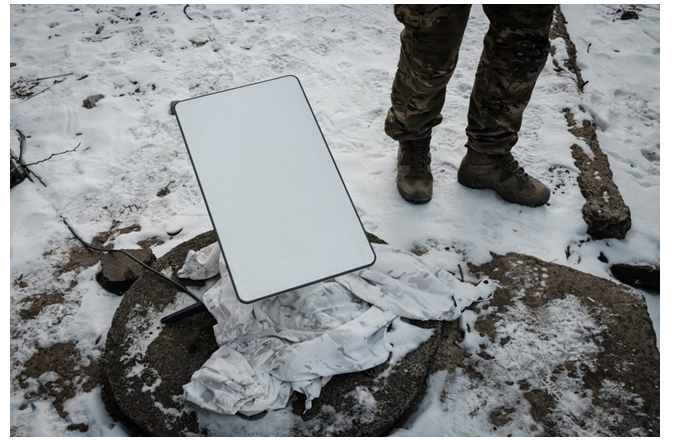
A Ukrainian serviceman stands next to the antenna of a Starlink satellite-based broadband system in Bakhmut, Ukraine. | Yasuyoshi Chiba/AFP via Getty Images |
“OVAL OFFICE PART 2”: The transatlantic split that opened up following last week’s momentous phone call between Trump and Russian President Vladimir Putin is now lurching into full-blown crisis. Let’s pick through where this is headed.
What started last Friday as a story about Trump throwing Putin a $6 billion bone via a sanctions-busting deal for Russian diesel has morphed into something much more serious. Despite Trump’s public assurance yesterday that “we’re still helping” Ukraine, the Kyiv government now says unequivocally that the U.S. has cut off crucial aspects of military support.
Crucially, Ukraine said the downgrading of vital Starlink satellite services happened without warning, in the middle of the night, as Ukraine battled waves of brutal Russian attacks. Ukrainian frontline soldiers told POLITICO just how serious the loss of capability has been. And speaking today to broadcaster Piers Morgan, Ukraine President Volodymyr Zelenskyy directly accused Trump of siding with the Russians.
“I am sure they knew what they did,” Zelenskyy said. “Because it was 1 a.m. at night, Starlink was blocked by SpaceX and the United States … They switched off that. It’s their decision. People were killed [in Ukraine] because not enough destroying, not enough interceptors, including interceptors with Starlink which didn’t work.”
Zelenskyy’s decision to go public — and in an interview with a close friend of Trump — has blown open the private divisions that have bubbled beneath the surface for days. The White House has yet to respond, but Zelenskyy’s direct challenge is unlikely to provoke sympathy from Trump. The diplomatic crisis may yet worsen in the coming hours.
Talks are progressing behind the scenes. Ukraine’s former foreign minister Mykhailo Fedorov said this afternoon that some Starlink-related services have now been restored, but warned that the removal of all restrictions remains “critical” for Ukraine’s defense. SpaceX owner Elon Musk said the systems used by Ukraine are “are owned and controlled by the US government” and that “any limits on speed or usage are decided by the US military and ultimately POTUS.”
The sense of dread in Ukraine is real. Veronika Melkozerova, POLITICO’s Ukraine reporter, told Forecast via a series of late-night Slack messages from Kyiv that Ukrainian officials are “extremely worried” by where this is headed. “Formal intelligence-sharing is still going on, and Starlink is working over Ukraine,” she stressed. “But the latest unexplained disruptions have forced many in Kyiv to think the U.S. has started quietly acting in favor of the Kremlin.”
Starshield services, which use Elon Musk’s Starlink satellites, are “crucial for Ukraine’s drone interception,” she said, as well as for “middle [range] strike operations against Russian logistics.”
There is plenty more the U.S. could do to increase pressure on Zelenskyy. “The next step would be to cut off intelligence-sharing for targeting Russian positions in Russia and Ukraine,” POLITICO’s global security reporter Paul McLeary tells Forecast. “That would be crippling to the war effort. It’s more strategic than the frontline tactical stuff — hitting command posts, hitting oil refineries in Russia. That’s all U.S. intel. And the Europeans just can’t pick that up yet, they don’t have enough capability.”
Dmytro Kuleba, the former Ukraine foreign minister, told POLITICO’s Jamie Dettmer this week that Europe can only replicate “about two thirds of the U.S. intelligence.” He explained: “The Europeans can’t replicate the eyes over the Russian airfields, or targets deep inside the country like the missile launching pads, and energy infrastructure.”
Ukraine’s allies across Europe thus find themselves in an impossible position tonight — desperate to show a united front with Zelenskyy, but wary of further fracturing the transatlantic alliance by criticising Trump in public. British Prime Minister Andy Burnham was careful to sidestep angry questions about Trump in the U.K. parliament today. “What I have to do in my role is try and repair bridges, so that the support comes back,” Burnham said. U.K. Defense Secretary Wes Streeting will meet his U.S. counterpart Pete Hegseth at the Pentagon tomorrow afternoon.
But the questions will keep coming. All 27 leaders of EU nations will gather in Brussels tomorrow for their bimonthly European Council summit, and will face “doorstep” reporter interviews as they head in. Expect some to choose their words more carefully than others when the issue of Ukraine is raised — especially given Zelenskyy is due to join the summit in person on Friday, when further EU sanctions on Russia will be discussed.
Already, some EU leaders have been less than diplomatic. Trump’s former ally Giorgia Meloni, the far-right prime minister of Italy, today warned that the U.S. oil deal with Putin “legitimizes Moscow” and “provides new revenue to finance the war.” All eyes will now be fixed on Trump’s Truth Social feed to see if the transatlantic chasm widens again.
FUTURE INTELLIGENCE
HOUSE OF CARDS: U.S. Republicans are saying the quiet part out loud. With less than three weeks to go until the midterm elections, the House of Representatives looks lost.
Multiple private conversations between POLITICO reporters and senior Hill Republicans reveal a widespread acceptance that the political headwinds are simply too strong for the GOP to hold its marginal majority in the lower chamber. The question many are now asking is just how big a Democratic majority on Nov. 3 might be.
“Republicans knew it would be hard to keep the House,” POLITICO’s senior Congress reporter Meredith Lee Hill tells Forecast. “They never imagined it would be this hard. The vibe right now is to save as many seats as possible. It’s serious triage time.”
That triage is now playing out in battleground seat after battleground seat, as the Republican campaign machine abandons ship and concentrates its cash firepower elsewhere in the final stages of the campaign. President Trump is spending much of his time rallying in what were once considered safe Republican territory in what looks like an effort to prevent a worst-case scenario Dem blowout.
A Democratic-led House would have the power to launch investigations into the Trump administration, though is unlikely to be able to pass legislative priorities unless the Senate also turns Blue. The race for a Senate majority still remains on a knife-edge, with a handful of battleground states from Alaska to Texas poised to decide whether Dems pick up the net four seats they need to take full control.
The size of a Dem majority in the House matters less, but could yet make a material difference to Democrats’ 2028 prospects. “A more robust majority matters for party unity,” Forecast editor Charlie Mahtesian notes. “A razor-thin majority, as we’ve seen with the GOP, increases the likelihood of debilitating intra-party fractures. A bigger majority might also give the party more geographical breadth, which is especially valuable for a party like the Dems that is often caricatured as coastal, affluent and culturally out of touch.”
QUOTE OF THE DAY
“As part of demonstrating our personal and professional integrity, I expect employees to avoid conflicts of interest in our work, to act impartially, and to avoid using our public offices for private gain.”
— U.S. Secretary of State Marco Rubio reminds State Department employees to abide by their ethics rules, a day after Donald Trump ousted U.S. Ambassador to Greece Kimberly Guilfoyle.
HARD POWER: CARNEY HEADS HOME
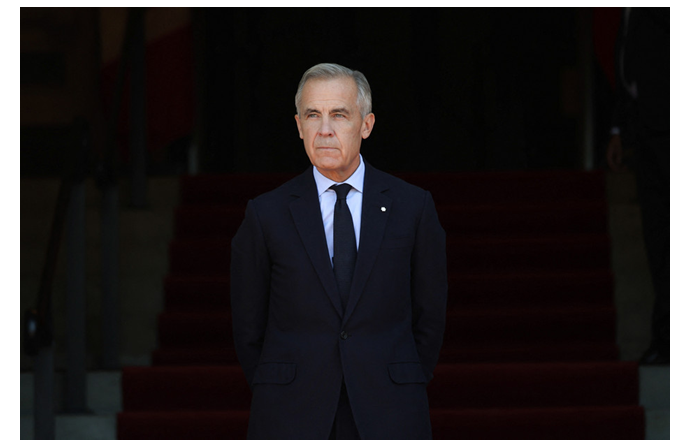
Canadian Prime Minister Mark Carney attends welcoming ceremony at the Parliament of Canada on Sept. 24, 2026 in Ottawa, Canada. | Dave Chan/AFP via Getty Images |
Having worked as Bank of England governor through the Scottish independence and Brexit referendums of the 2010s, Mark Carney knows a thing or two about separatist movements.
So tomorrow will mark a homecoming in more ways than one for the Canadian prime minister, as he heads back to Alberta — the province where he grew up in the 1970s — to attend a unity rally ahead of next week’s independence vote.
Alberta is the oil-rich region of western Canada where an independence movement has been slowly gaining ground for several decades. Past Liberal governments have helped fuel its growth with pro-environment policy platforms that some in Alberta feel unfairly targets their province.
Monday’s vote — not a binding referendum, but a formal poll of Albertans on whether a referendum should be held — could therefore have been an awkward moment for Carney, who has built his political platform on a message of national unity in the face of U.S. aggression. It comes, after all, just a week after Quebec elected separatist politicians to lead its parliament for the first time in a decade.
But polls suggest Albertans will vote overwhelmingly on Monday to remain a part of Canada. And Carney knows he has already rebuilt many of the bridges that were torched by his Liberal predecessor, Justin Trudeau — repealing environmental laws that Albertans had long despised, and pressing ahead with a new oil pipeline to the Canadian west coast.
“Liberals here in Alberta were just not respected,” POLITICO’s Mickey Djuric tells Forecast in a phone call from Calgary. “But that has changed under Carney, to the point where he actually can come into Alberta without being bombarded with protests or blockades, things that we’d seen with Trudeau. Trudeau used to be swarmed by protesters — he could barely even walk around in public. It is actually kind of a big deal that Carney is going to be in Calgary, holding a rally.”
It’s still an awkward tightrope for Carney to tread, given his former role as a U.N. climate change envoy and his insistence to Liberal supporters that he is passionate about the environment.
“He got rid of the consumer carbon tax here in Canada — it was his first thing that he did in office,” Mickey says. “But at the same time, he’s kept the industrial carbon tax, which is a tax for the country’s largest emitters. And he always points to this industrial carbon tax as a way that his government is still focused on the environment. He also says that in order to build this west coast pipeline, they’re building a carbon capture project to offset emissions. So he still very much views himself as someone who champions climate change policies.”
The balance is working, Mickey adds, noting “remarkable” polling that shows the prime minister is now the most popular politician in Alberta. More than 18 months into his centrist project, there’s no sign yet of the Carney honeymoon ebbing away.
SOFT POWER: BEAUTIFUL BOOKS, WHERE ARE YOU
She was hailed as “the first great millennial author.” Sally Rooney has sold more than six million copies of her books globally. Two of her bestsellers have been adapted for television. Her novels have found a huge cultural cachet among her devoted fanbase of millennial readers. But you can’t buy them in the U.K. anymore.
Modern literature’s it-girl is dealing with the political fallout of her support for the banned Palestine Action protest group, which was formally designated by the British government as a terrorist organization last year after activists staged protests in U.K. military and defense sites. Rooney had pledged to back the group with proceeds from her book sales — immediately opening her up to a thicket of legal risk.
Since it’s a criminal offense in Britain to support groups banned under the U.K.’s Terrorism Act, the Irish novelist could in theory be arrested if she sets foot inside the country. Last autumn she canceled a trip to London, where she was slated to receive a literary award, and hasn’t returned since.
And the situation just got more serious for Rooney fans. The author can’t legally receive U.K. royalties for her books, since she’s pledged to donate the funds to Palestine Action. So her publisher, with Rooney’s assent, announced today that her novels will no longer be available for sale in the U.K.
“To sell a writer’s work and not be able to pass on earnings is an unconscionable situation,” Rooney’s U.K. and Ireland publisher, Faber, wrote in a statement. “As such, and in full agreement with Sally, we have taken the decision that we can no longer supply her works in the UK in any format.” Existing Rooney books already in U.K. bookstores can still be sold off, but will not be replaced.
Rooney had pleaded with the UK High Court last year to prevent such a ban being enforced. “The disappearance of my work from bookshops would mark a truly extreme incursion by the state into the realm of artistic expression,” she said.
Count one for the state against artistic expression. See you tomorrow.
THURSDAY’S AGENDA
- G20 finance ministers and central bank governors meet in Bangkok.
- EU leaders meet in Brussels for a two-day summit, with Ukraine, energy, migration and the bloc’s next seven-year budget all on the agenda.
- Canadian PM Mark Carney addresses a pro-unity rally in Alberta ahead of the province’s Oct. 19 separatist referendum.
- More U.S. economic data — covering retail sales and PPI inflation — released ahead of the Federal Reserve’s next interest rate decision on Oct. 28.
- Tesla’s long-awaited (and long-delayed) Roadster 2.0 to be unveiled in Texas.
Reach out with news, tips and ideas at forecast@politico.com. Did someone forward this email to you? Sign up here.
SUBSCRIBE to the POLITICO newsletter family: Brussels Playbook | Brussels Playbook Capitals | London Playbook | London Playbook PM | Playbook Paris | Berlin Playbook | Madrid Playbook | Sunday Crunch | EU Influence | London Influence | D.C. Playbook | D.C. Influence | Decoded | Canada Playbook | POLITICO Forecast | Canberra Playbook | All our POLITICO Pro policy morning newsletters
Source: Politico
Serbia’s EU bid gets a second chance
By GERARDO FORTUNA
with MARI ECCLES and MAX GRIERA
PRESENTED BY TIKTOK
Send tips here | Follow us @gerardofortuna @NicholasVinocur @GabrielGavin | Listen to Playbook and view in your browser
POLITICO NAMED DIGIDAY’S MOST INNOVATIVE PUBLISHER.
Yesterday POLITICO was named 2026 Most Innovative Publisher by Digiday. We are proud of this honor and of the incredible efforts of our team around the world. We also know the credit starts with you, our readers and subscribers.
Everything we have built this year, including our expansions to Australia and Spain, Decoded by POLITICO, the POLITICO Pub and our mobile app, began with the same question: What do the people who count on us need next? Your feedback is how we find the answer, and your trust is what we work to earn every day.
Thank you. We are not finished. There is more coming, and we will keep building it for you.
POLITICO CEO Goli Sheikholeslami and Global Editor-in-Chief Jonathan Greenberger
CIAO THERE. Gerardo Fortuna back with you.
In today’s Playbook:
— Commission shake-up could make EU documents even harder to obtain.
— MEPs weigh lifting Hungary’s Article 7 procedure, but are split on the timing.
— Faces in the crowd: Sophie Wilmès, Tom Gibson, Marta Kos, António Costa, Dávid Vitézy, Agnieszka Bartol, Laura Codruța Kövesi, Aleksandar Vučić, Veronika Cifrová Ostrihoňová, Ursula von der Leyen, Helmut Brandstätter… and many more.
On today’s Brussels Playbook Podcast: Nick and Paul discuss who, if anyone, in Europe should be speaking to Russia.
| The Putin call dividing EU leaders |
**A message from TikTok: Did you know TikTok advertising generated €31 billion in economic output across the EU in 2025? New research shows the platform helped businesses grow, supporting €13 billion in additional economic output for small and medium-sized businesses and helping millions of businesses reach customers across borders.**
DRIVING THE DAY
EU PONDERS FUTURE OF SERBIA’S ACCESSION: Serbia’s political shake-up is stirring hopes in Brussels that a new, pro-European government in Belgrade could revive the country’s stalled EU bid, according to four European Commission officials and three diplomats who spoke to Playbook.
Times a-changing? After the student-led opposition’s election win ended Aleksandar Vučić’s 12-year grip on power, there’s a sense of optimism among those working on enlargement at the Commission, one official said, with another calling the vote a potential “game changer.” They were granted anonymity to speak frankly about the internal mood.
Serbia’s EU bid has been stuck for years. Since 2021, the Commission has considered Belgrade technically ready to open its next cluster (EU jargon for a group of negotiating chapters in accession talks), which covers competitiveness and growth. But a group of countries including the Netherlands, Belgium, Sweden and Croatia have resisted, citing concerns over democratic backsliding and media freedom.
If Belgrade gets a pro-EU government, it could move the needle in national capitals and bring Serbia closer to becoming a member of the bloc, two of the Commission officials said.
But that’s a big if, one diplomat from a country that has opposed Belgrade’s bid cautioned. “Any positive change on all of those issues would be more than welcome of course, but for now all that remains to be seen,” the diplomat said.
Positive signs: The victorious party’s election manifesto contains elements that are promising for accession and has been welcomed at the Berlaymont. But the Student List has yet to name who would lead its new administration and any progress on joining the bloc would hinge on the enactment of reforms.
Residual resentment: Brussels may also have to contend with a perception by the incoming government that the EU had previously been too willing to use Vučić as its go-to interlocutor, Una Hajdari reports.
Opening the door: Commission President Ursula von der Leyen and Council President António Costa congratulated the Student List after the election, pledging “to work together to advance Serbia’s future in the European Union.” Others went further. “The Serbian people have given a strong mandate for change,” said Enlargement Commissioner Marta Kos, while centrist MEP Helmut Brandstätter called for EU accession talks to “resume as soon as possible.”
EU ambassadors are set to meet today to discuss the Commission’s proposal for democratic safeguards in future accession treaties. Montenegro, whose treaty is already being drafted, is set to be the focus. But last week’s election could mean Serbia is discussed too, two diplomats said.
The next litmus test will be the Commission’s enlargement report, due next week. It covers the past 12 months of progress in the EU’s candidate countries and should provide early insight into the benchmarks Brussels expects the new government to hit to move its bid forward.
BIG AND BREAKING
ISRAEL VOTE TOO CLOSE TO CALL: Benjamin Netanyahu has called for a right-wing government, while his opponent Gadi Eisenkot said voters had rejected the longtime Israeli prime minister, as exit polls suggest the two blocs are deadlocked, Reuters reports. If neither side reaches the 61 seats needed for a majority in parliament, Israel faces another period of political uncertainty, Daniel-Dylan Böhmer explains.
Not that everyone is losing sleep over the outcome: Data gathered by The POLITICO Poll ahead of the vote suggests the outcome won’t resonate in the U.S., where most will greet any new leader in Israel with shrugging indifference.
BOLSONARO FLEES BRAZIL: Failed presidential candidate Flávio Bolsonaro and his family have touched down in Florida after leaving Brazil, the FT reports. A senior U.S. State Department official told Associated Press the family would be granted visas.
TALKING WITH MOSCOW: After the leaders of Finland Alexander Stubb and Norway Jonas Gahr Støre called Vladimir Putin to discuss Ukraine peace talks, some European members weren’t happy, warning countries going it alone undermined EU unity, Tim Ross and Hannah Roberts tell us.
CANADA’S LABEL PROBLEM: Just hours before the EU-Canada summit kicks off, EU capitals still couldn’t agree on whether to call Canada an “associate member,” Sebastian Starcevic reports. Meanwhile, the separatist leader of Quebec is furious at being excluded from the summit, warning his provincial government could still have the last word.
KÖVESI’S UNFINISHED BUSINESS: As European Chief Prosecutor Laura Codruța Kövesi wraps up her seven-year tenure Friday, she still wants answers from von der Leyen over Pfizergate. We teased it in yesterday’s Playbook Capitals.
REPORTERS WITHOUT DOCS
PRESS VS. COMMISSION: Long-awaited plans to revamp the Commission could make it harder for journalists to gain access to documents and hold the EU executive to account. That’s according to a letter sent today to Ursula von der Leyen by a group of 16 associations representing journalists and news outlets, seen by Mari Eccles.
Canteen scoops only: Recommendations for reforming the Commission mention releasing info to the press “where appropriate.” That, according to Tom Gibson from the Committee to Protect Journalists, could leave “a lot of leeway for the Commission to classify everything except the lunch menu.”
A senior EU official told Playbook that under any reorganization there should be a “shift from documents to focus on information,” and that timely decisions should be made about “information that should be released, with some exceptions for personal data or security.”
Delayed and redacted: The group, which includes the International Federation of Journalists, Follow the Money and the European Federation of Journalists, says that under existing rules reporters are already unable to do their job properly. It’s a system in which there are “huge delays,” access is denied on “questionable grounds” and documents that are shared contain so many redactions they’re basically unintelligible, the group says. “Stories which should emerge do not.”
What kind of stories? The reporters flagged difficulties in finding out who got post-Covid-19 recovery funds, why the Commission withdrew controversial legislation on patents and the kind of communication the executive had with TikTok about the Romanian election in 2024.
#Journorequest: The groups want to see, among other things, the Commission publish figures on waiting times for responses, implement EU court rulings on transparency and improve internal procedures on filing and archiving documents (to avoid another Pfizergate-style hunt for texts).
“We have not received the letter,” Commission spokesperson Thomas Regnier told Mari, but added that the EU executive, which received around 7000 requests every year, takes its transparency responsibility “extremely seriously.” The Commission updates its internal guidelines when required by the court, he said.
20-SECOND PLAYBOOK PRIMER
The EU has come out with its first climate-proofing law … but what does that mean? The proposed Climate Resilience Law would require EU members to take into account a warmer world when they draw up policies and budgets. The Commission wants national governments to prepare for temperatures that are 2C higher by 2050 and 3C higher by the end of the century. The law also obliges countries to carry out national climate-risk assessments every five years, starting in June 2029.
TALK TO PLAYBOOK: On the Brussels Playbook Podcast, Paul asked who is afraid of whom in the Brussels bubble. WhatsApp us on +32 491 050629 and listen from 7 a.m. to hear if we give you a shoutout.
PARLIAMENT ASSESSES HUNGARY’S REFORMS
D-DAY FOR MAGYAR: A group of MEPs, led by Parliament Vice President Sophie Wilmès, will today deliver its preliminary assessment on whether to lift the Article 7 procedure that was imposed on Hungary in 2018. That assessment will come after a meeting with Transport and Investment Minister Dávid Vitézy, Max Griera writes.
Budapest wants to see the end of the Article 7 procedure, a mechanism that’s deployed when a country is considered at risk of breaching the bloc’s core values (sometimes called the EU’s “nuclear option”). But EU members are waiting for the Parliament to give its opinion.
The European People’s Party is pushing to have the Article 7 lifted soon (Prime Minister Péter Magyar’s Tisza party is an EPP member), with a vote scheduled for the December plenary, following a debate in November. “The Tisza government is working to rebuild democracy … they have achieved impressive results in a short time,” said EPP Vice-Chair Tomas Tobé, who will lead a 15-strong EPP mission to Budapest next week.
But the Socialist, Renew and Green groups are more cautious and may want time to see if reforms are implemented. “It’s quite symbolic when and how we call for the ending of it, so we need to be careful,” said Slovak centrist MEP Veronika Cifrová Ostrihoňová, a member of Parliament’s rule-of-law monitoring group. “The delegation’s findings … will be crucial in deciding whether to support the December deadline.”
Magyar speaks: Parliament and Magyar have been in contact about an appearance in Strasbourg for months, according to two officials, but no date has been set.
DASHBOARD
As Brussels and Ottawa work to deepen ties, the U.S. remains the destination for about two-thirds of Canadian merchandise exports, even at their lowest point in July 2026. The U.K.’s share has grown, while the EU’s has remained relatively stable.
5 MORE THINGS GETTING US TALKING
KIDS CAN’T WAIT FOR BRUSSELS: Six weeks after the European Commission proposed its EU Kids Act, European capitals are pushing ahead with their own social media bans for minors — some tougher than Brussels’ plan.
FRONTEX STARTS SCROLLING: The EU border agency will receive powers to monitor public social media posts for information on migration flows, as part of its latest overhaul.
CRITICAL FRIENDSHIP: The European Investment Bank is set to sign a framework deal with Canada this week, paving the way for investment in critical raw materials and other sectors.
GERMANY’S FIGHTER JET DILEMMA: Berlin must choose between joining Britain, Italy and Japan’s fighter jet project or developing one with Sweden and Spain.
BRITAIN’S BUDGET CRYSTAL BALL: What’s coming in the U.K.’s 2026 budget? POLITICO’s reporters flag the announcements, fiscal surprises and political traps to watch.
BRUSSELS CORNER
WEATHER: Mostly sunny, with a top temperature of 14C. a
POLISH SURPRISE GOODBYE: The Brussels bubble is today coming to terms with the departure of Polish Perm Rep Agnieszka Bartol, who’s off to Warsaw to take on the role of minister of funds and regional policy. Ambassadors are lamenting the loss of one of their “funniest colleagues.”
Exit stage left … Bartol’s departure appears to open up the race for the European Council’s powerful secretary-general job, with incumbent Thérèse Blanchet expected to leave before late 2027. Bartol was a potential contender, alongside France’s EU Ambassador Philippe Léglise-Costa, who is also expected to leave his current post after May 2027, following the French elections.
… or not? As Poland heads into an election in October 2027, Bartol could yet make a Brussels comeback via the Council job, one diplomat suggested. Never say never in the EU bubble.
PINK SCREENS, SILVER JUBILEE: Brussels’ proudly subversive queer film and culture festival turns 25 today. The celebrations kick off at LaVallée in Molenbeek at 6 p.m., with the opening of “Radical Pillow Talk,” followed by a Sébastien Delage concert at 7:30 p.m.
DEATH HAS A SOUNDTRACK: Remember the Marolles’ Día de Muertos celebrations we mentioned Monday? The festivities continue with SONEX, straight from Mexico, at Atelier 210, at 8:30 p.m. The trio mixes traditional Son Jarocho and fandango with contemporary urban sounds. Tickets: €16 in advance, €19 on the day.
THE MÉTROPOLE UNMASKED: The historic Hotel Métropole on Place de Brouckère has finally got its face back. Closed since April 2020, the protected Brussels landmark is still undergoing interior restoration, with no reopening date in sight. But after years behind scaffolding, its freshly restored façade is visible again. There’s still hope for the Palais de Justice. More from BRUZZ.
**Sponsored Survey: WE WANT TO HEAR FROM YOU. Please take a 1-minute survey about one of our advertising partners.**
TOP OF THE PLAYBOOKS
Berlin: Chancellor Friedrich Merz is in Tokyo today, hoping to draw inspiration from Japan’s approach to reducing its critical raw minerals dependency on China.
Paris: An effort is underway to salvage the commission of inquiry into the violence that took place on Oct. 17-18, Playbook has learned from several parliamentary sources.
Madrid: Most of Pedro Sánchez’s ministers have found a place on the PSOE’s electoral lists … but a few are seeking greener pastures.
London: It’s budget day in Britain, with Chancellor John Healey poised to set out fresh cost-of-living support in what’s expected to be a lower-key fiscal event.
Read more from our Playbook family: Washington … Ottawa … Canberra.
AGENDA
— Coreper II meeting at 9.30 a.m.; Coreper I at 10 a.m.
— Defense Commissioner Andrius Kubilius participates in a North Atlantic Council meeting in Brussels and meets NATO Secretary-General Mark Rutte.
— Environment Commissioner Jessika Roswall is in Yerevan for COP17. She gives a press conference with Irish Biodiversity Minister Christopher O’Sullivan at 2.30 p.m. Watch live. She also takes part in a ministerial discussion convened by the UN Environment Programme and a meeting on plastic pollution. She meets the U.K’s Nature Minister Jenny Riddell-Carpenter and Chilean Environment Minister Francisca Toledo.
— European Parliament President Roberta Metsola is in Malta. She addresses the General Assembly of Confartigianato, the body representing Italian small and medium businesses, via video at 10.30 a.m. Italian Prime Minister Giorgia Meloni is attending the assembly in Rome. Watch live.
— Commission Executive Vice President Raffaele Fitto meets Romanian Investment and European Projects Minister Alexandru-Mihai Ghigiu in Brussels.
— Climate Commissioner Wopke Hoekstra receives representatives of CAN Europe and other climate NGOs.
— Kubilius and Energy Commissioner Dan Jørgensen co-chair a dialogue with EU refineries.
— Economy Commissioner Valdis Dombrovskis delivers a virtual keynote address at the 111th Conference of Directors General of the National Statistical Institutes, in Bern.
— Budget Commissioner Piotr Serafin meets MEP Andrzej Halicki and Hungarian Ambassador Bálint Ódor in Brussels.
— Justice Commissioner Michael McGrath speaks at a meeting of the EU Freeze and Seize Task Force in Brussels.
— Mediterranean Commissioner Dubravka Šuica addresses the Iraq National Trade Forum by video message.
**Romania’s economic future is on the agenda: tune in on November 6 for keynotes and panels on competitiveness, investment and strategy. Register now to watch POLITICO’s Spotlight panel at the Concordia Summit.**
BIRTHDAYS
Former MEPs Romeo Franz, Michaela Šojdrová, Joachim Schuster, Enrique Calvet Chambon, Olle Ludvigsson; former MEP and POLITICO 28 alum Marietje Schaake; Jamil Anderlini, POLITICO’s regional director in Europe; Klaus-Heiner Lehne, former president of the European Court of Auditors; Jill Craig of Penta Group; Startups for Europe’s Robin Wauters; Vince Chadwick, from Rapporteur; Microsoft founder Bill Gates. Independent Czechoslovak State Day.
Playbook is brought to you by POLITICO’s EU Politics team: Gerardo Fortuna, Nicholas Vinocur, Gabriel Gavin, Zoya Sheftalovich, Max Griera, Mari Eccles, Hanne Cokelaere, Gregorio Sorgi and Sebastian Starcevic. And: reporters Milena Wälde and Daria Zakharova, editors Alex Spence and James Panichi, and producers Dean Southwell and Hugh Kapernaros.
**A message from TikTok: Did you know TikTok advertising generated €31 billion in economic output across the EU in 2025? New independent research shows the platform helped businesses grow, acting as a discovery engine for opportunity across the European economy. The impact goes well beyond the app. Advertising on TikTok helped generate €13 billion in additional economic output for small and medium-sized businesses, while more than 6.5 million EU businesses used TikTok to reach customers across borders. Discovery on TikTok helps small businesses connect with new customers, creators reach new audiences, and useful ideas and skills travel between countries. These connections can translate into real-world growth, from increased sales for local businesses to new opportunities for entrepreneurs and creators. Across the EU, TikTok is turning online discovery into economic activity, helping businesses grow and connecting people and products across borders.**
SUBSCRIBE to the POLITICO newsletter family: Brussels Playbook | Brussels Playbook Capitals | London Playbook | London Playbook PM | Playbook Paris | Berlin Playbook | Madrid Playbook | Sunday Crunch | EU Influence | London Influence | D.C. Playbook | D.C. Influence | Decoded | Canada Playbook | POLITICO Forecast | Canberra Playbook | All our POLITICO Pro policy morning newsletters
This email was sent to martin@dynamiceventsmalta.com
Update your preferences | Unsubscribe from this email | Unsubscribe from all emails
POLITICO SRL · Rue de la Loi 62 · Brussels 1040 · Belgium
Source:Politico
Mared Gwyn Jones.Eu correspondent.November 9,2026.
Good morning.It’s Thursday, and I’m Mared Gwyn. In this edition: What the Democrats’ sweeping win in the US midterm elections means for Europe, and Germany and Brussels continue to clash over what “associate” EU membership actually means.
|
By SEBASTIAN STARCEVIC
with GERARDO FORTUNA and ZOYA SHEFTALOVICH
PRESENTED BY Tiktok
Send tips here | Follow us @gerardofortuna @NicholasVinocur @GabrielGavin | Listen to Playbook and view in your browser
GOOD MORNING.This is Sebastian Starcevic, writing to you from sunny Dublin. I’ll be getting a pint of Guinness later at Grogan’s; thanks to Ireland’s foreign minister for the suggestion. Read on for other recs from POLITICO’s Irish contingent.
In today’s Playbook:
— Europe’s leaders will hash out who should speak for the bloc in Ukraine-Russia talks.
— Australia’s government insists it can get its trade deal with the EU through the parliament in Canberra.
— Faces in the crowd: Helen McEntee, Giorgia Meloni, Kristen Michal, Jonathan Powell, Steve Witkoff, Christine Lagarde, Tim Ayres, Shoshana Zuboff, António Costa, Valdis Dombrovskis and more …
On this week’s Brussels Playbook Week Ender: Anne McElvoy talks to Belarusian opposition leader Sviatlana Tsikhanouskaya about talks to end the war in Ukraine and Green MEP Hannah Neumann and Gordon Repinski about the rise of Ilse Aigner.
What will a female president mean for Germany and Europe?
A message from TikTok: Did you know TikTok advertising generated €31 billion in economic output across the EU in 2025? New research shows the platform helped businesses grow, supporting €13 billion in additional economic output for small and medium-sized businesses and helping millions of businesses reach customers across borders.**
DRIVING THE DAY
WHO SPEAKS FOR EUROPE? European Council President António Costa is emerging as the front-runner to represent the EU in eventual Russia-Ukraine peace talks. But resistance from Europe’s biggest powers and deep divisions over the role of top diplomat Kaja Kallas threaten to derail the efforts to secure the bloc a seat at the negotiating table.
As EU leaders gather in Dublin today to thrash out who should speak for Europe, Playbook’s conversations with leaders, diplomats and officials reveal a growing consensus around Costa — though the bloc’s most powerful capitals might not accept being represented by Brussels at all.
Look no further: If you ask Estonian Prime Minister Kristen Michal, the answer is obvious: it should be Costa and Kallas. “Putin does not have to like them,” he told me in an interview in Dublin. What’s important is they are “accountable” to the EU and will presumably hold their positions until 2029.
The pair makes sense on paper: Costa’s role means he represents the EU on the world stage, while Kallas handles matters of foreign policy. The Baltics, Luxembourg, Poland, Italy and others support Costa taking the lead, diplomats and officials told Playbook.
But while most diplomats we spoke to are on board with Costa, some are far less keen on Kallas, who is seen as too hawkish on Russia. “That’s a joke, right?” a European diplomat (granted anonymity for obvious reasons) said, adding that Kallas is “probably the worst person you could pick.”
Then again: Her hawkishness is precisely what makes her the right pick, a second senior European diplomat argued. “It would make much more sense,” they told my colleague Zoya Sheftalovich. “That’s what Putin would do. He would pick whoever you don’t want to talk to.”
Both Kallas and Costa have signaled they’re up for the job. Kallas told reporters in Dublin yesterday that she and Costa were chosen for their roles in 2024, two years after the invasion of Ukraine, on the understanding that they would be the ones talking to Russia someday. And Costa stressed in his letter to Italy’s Giorgia Meloni on this topic that the EU is represented by its institutions.
Non and nein: That might not fly with France and Germany, my colleagues Jacopo Barigazzi, Giorgio Leali and Hans von der Burchard report. The EU’s two biggest countries will oppose any format that means giving up their seat at the table, a diplomat and an EU official said.
Wild card: Another name that has come up is that of Jonathan Powell, the U.K.’s national security adviser (and chief of staff to Tony Blair when he was PM), a European diplomat in Britain told my colleague Esther Webber.
Lower your expectations: The summit today is unlikely to result in an envoy being formally selected but will result in an “understanding” around the leaders’ table, a senior EU official said. “The individual or the structure itself, I think, is something that we need to tease through a little bit more,” Irish Foreign Minister Helen McEntee told me.
Whatever happens, you’ll want to tune in today: “It has endless possibilities. You could even have a TV show about it,” Michal joked, adding that the topic had already come up briefly among leaders on Thursday. “But we are saving the best part for tomorrow.”
We’ll bring you the best of the action in our live blog.
BIG AND BREAKING
HOW THE MACRON CONSPIRACY THEORY BLEW UP: My colleague Marion Solletty has a must-click piece out this morning tracing how the false claims about Brigitte Macron went from a fringe theory to a global story — and became a cautionary tale on the limits of political influence in the digital age.
SHAKE-UP MEETUP: The Commission’s HR chief Piotr Serafin will meet this afternoon with union leaders to talk through the biggest administrative overhaul of the institution in two decades, which has already got the thumbs-up from the Renouveau et Démocratie staff union.
PARLIAMENT PLAYS FOR TIME: The European Parliament might postpone a key vote on the EU’s next seven-year budget to January to gain leverage over governments pushing to cut farmers’ subsidies and regional payouts, EPP negotiator Siegfried Mureșan told Playbook. (More here for Morning Agriculture & Food subscribers.)
FUEL FOR CONCERN: NATO forces could face jet fuel shortages in a future war as Europe’s transition away from fossil fuels and shrinking oil refining capacity create dangerous vulnerabilities, a new study has warned.
YOUR SUMMIT CHEAT SHEET
WHAT TO WATCH TODAY: Artificial intelligence may be the official focus in Dublin, but leaders have a packed side agenda — from Ukraine’s place in peace talks to the race for the top job at the European Central Bank, Gerardo Fortuna reports. Here are five things on our radar:
1 — AI frontier: Jensen Huang’s fall has been a reminder that Europe has largely been a spectator in the global AI race, Pieter Haeck writes. Leaders will debate whether Europe should build frontier models to rival U.S. and Chinese developers or focus on applications. António Costa wants Europe to become “a leading and sovereign player” across the AI value chain — the obstacle is funding computing power and infrastructure. Mistral CEO Arthur Mensch and AI pioneer Geoffrey Hinton will address leaders.
2 — The Ukraine envoy question: Costa agreed to put the issue formally on the agenda after Giorgia Meloni called the EU’s approach “all over the place.” The bloc remains deeply divided over who it should choose as its representative — yet the task of choosing has become increasingly urgent after U.S. envoy Steve Witkoff said Europeans would be invited to the next round of Ukraine negotiations.
3 — Ukraine’s €70 billion gap: While peace talks gather pace, Kyiv is also facing a massive funding shortfall next year. German Chancellor Friedrich Merz wants Ukraine financing linked to talks on the EU’s budget, which is being resisted by governments wary of tying the two together.
4 — The MFF: The EU’s next long-term budget is another issue not formally on the agenda, but with the clock ticking, each meeting is a potential arena to narrow the gulf between the warring camps’ positions ahead of a new negotiating document expected around Nov. 21. Merz is set to discuss the budget with Macron, though no breakthrough is expected.
5 — ECB jobs bargain: Macron and Merz are also expected to discuss the race to succeed Christine Lagarde. Spain’s Pablo Hernández de Cos and former Dutch central banker Klaas Knot are leading contenders. The contest also covers two other senior ECB posts, with Paris and Berlin both coveting the chief economist job, according to two officials.
20-SECOND PLAYBOOK PRIMER
Much of the prep work for today’s informal leaders’ meeting will have been done by sherpas … but what are they? Sherpas are personal representatives (or chief negotiators) who carry out behind-the-scenes work for ministers, heads of state and government ahead of international summits. Named after the Himalayan mountain guides who lead climbers up peaks, political sherpas are meant to guide leaders through difficult diplomatic terrain.
TALK TO PLAYBOOK: WhatsApp us on +32 491 050629 and listen from 7 a.m. to hear if we give you a shout-out.
CANBERRA INSISTS THE TRADE DEAL WILL HOLD
EXCLUSIVE — IGNORE THE NOISE: Canberra is “absolutely confident” the EU-Australia free trade agreement will get through Australia’s parliamentary processes, despite the opposition coalition threatening to bring it down, Australia’s Industry Minister Tim Ayres told Zoya Sheftalovich.
The trade deal is “unambiguously” in the interests of Australian businesses and workers, he said. “You’d have to have rocks in your head to oppose it.”
Damage control: The bullish comments come after Australia’s opposition’s trade spokesperson Matt Canavan, who previously called the country’s agreement with the EU the “worst trade deal ever,” again took aim at the agreement, criticizing its terms for farmers and climate commitments. In response, the European Parliament’s Australia delegation Chair Seán Kelly warned that if Australia reneges on the deal, it could be “buried” for decades, with Brussels having already shut the door to reopening negotiations.
The worrying math: Canavan’s opposition coalition cannot kill the deal on its own, but it could help block the laws needed to put it into effect in Australia’s Senate.
History lesson: Negotiated over eight years, the deal will cut tariffs and open market opportunities, while deepening the EU’s access to Australian critical minerals. Talks collapsed in 2023 over farm access and product names, but Donald Trump’s tariffs and concerns about reliance on China’s critical minerals gave the deal fresh geopolitical urgency earlier this year. The two sides reached an agreement in March.
On the Horizon: Ayres was in Brussels to formally sign up to Horizon Europe, which will give Australian researchers access to the EU’s €95 billion research program.
**Twenty years of POLITICO. One search away. Every fight in politics has happened before, in some form, and we were probably there for it. The new POLITICO app lets you search nearly twenty years of our reporting from your phone, across articles, newsletters, podcasts and people at the same time. Ask about a bill, a minister, a trade dispute or a budget standoff and get the whole story back: what happened last time, who was involved and how it ended. It’s the backstory in seconds, wherever you are. Handy before a meeting, essential before a vote, and (we’re told) slightly addictive on a long train journey. Get the new app.**
DASHBOARD
LAGARDE FOR PRESIDENT? Christine Lagarde’s early departure as European Central Bank chief fuels speculation that she could join the race to become French president next year — something she’s rejected in the past but not since announcing her early ECB exit. If she does enter the fray, new polling by Cluster17 for POLITICO suggests she’d fare as well as centrist candidate Edouard Philippe, as Pauline de Saint-Rémy reported yesterday. Here’s what that looks like.
5 MORE THINGS GETTING US TALKING
CALLING OUT DUBLIN: Academics and digital rights advocates Shoshana Zuboff and Johnny Ryan want the European Parliament to launch an inquiry into Ireland and the European Commission over Dublin’s track record on GDPR enforcement, according to a paper seen by Morning Cyber’s Ellen O’Regan (for subscribers).
DON’T IGNORE US: Exiled Belarusian opposition leader Sviatlana Tsikhanouskaya is urging the EU not to overlook Belarus in negotiations over Ukraine and Europe’s future security, Anne McElvoy reports.
TROUBLE IN THE HEARTLAND: Pedro Sánchez officially launched his reelection campaign yesterday in Andalusia, but the center-left is on the ropes even in a region that has been a political stronghold for decades.
BORDER CROSSINGS KEEP FALLING: Irregular crossings into the EU dropped 29% in the first 10 months of 2026, according to new Frontex figures out today and seen in advance by Playbook. The central Mediterranean route saw a 55% decline, while the western Mediterranean bucked the trend with a 21% rise.
DECLASSIFIED: In his weekly humor column, Paul Dallison asks whether the person most likely to get through to Vladimir Putin is judo star Teddy Riner, if he becomes president of France.
BRUSSELS CORNER
WEATHER: Partly sunny, with a chance of showers in the afternoon. High of 9C.
WHEN IN DUBLIN: We’re taking a brief interlude from our Brussels-focused tips to acknowledge those logging on from the Irish capital this morning. And what better way to mark the end of two days of summitry than to head out for a pint?
Good things come to those who wait: Irish Foreign Minister Helen McEntee urged me to go to The Hairy Lemon, which describes itself as “one of Dublin’s trendiest pubs.” Or better yet: Grogan’s. “It’s an institution if you’re looking for a pint of Guinness,” McEntee said. Our Irish POLITICOs also recommended the Long Hall, an iconic Victorian watering hole, and the Dawson Lounge (which claims to be the smallest pub in Dublin)
Those in the mood for some live traditional Irish music can head to the Cobblestone Pub. Only the hardiest of drinkers should brave the tourist-magnet Temple Bar on a Friday night, but it’s still name-checked by our colleague, who says it’s worth it … for one drink.
Missed your favorite? Feel free to send us your tips!
BACK IN BRUSSELS … PROTEST NO. 1: Municipal and CPAS/OCMW workers gather at Place Rogier at 10 a.m. to protest budget cuts, staff reductions and growing pressure on local public services.
PROTEST NO. 2: Brussels librarians are fighting doomscrolling the old-fashioned way: by reading books. Staff from Dutch-language libraries will ride Metro Line 1 from 10 a.m. to 11 a.m., hoping to tempt commuters away from their phones.
TOO EARLY FOR CHRISTMAS? At Playbook, we think so. But if you’re ready to get festive — and risk losing “Whamageddon” before December even starts — Mixed Trees opens Friday at MIX Brussels, with nearly 60 Brussels brands and designers reinventing the Christmas tree using their own materials and crafts. Free entry, all weekend. Just don’t blame us if you find yourself exposed to “Last Christmas.”
WEEKEND PLANS? Grrrabuge takes over LaVallée in Molenbeek on Saturday and Sunday, bringing together around 60 natural-wine producers, plus cider, beer, alcohol-free drinks and street food. It also wins Playbook’s entirely unofficial award for the best non-AI poster in Brussels. In the age of AI slop, that’s worth raising a glass to.
SPOTTED … at the presentation of the IMF’s Regional Economic Outlook for Europe, where sparkling wine flowed and a mysterious carbonara-flavored vol-au-vent stole the show: Economy Commissioner Valdis Dombrovskis and his cabinet members Ana Apse-Paese and Arnolds Eizenšmits; the European Commission’s Paul Haguenauer; MEP Jonás Fernández; Johannes Kleis, spokesperson for the Eurogroup president; the ECB’s Boris Vujčić; the IMF’s Mateusz Szczurek and Martin Caudron; European University Institute’s Maria Demertzis; Bank of America’s Daniela Cuciureanu; Euronews’ Maria Tadeo; the FT’s Paola Tamma; Rapporteur’s Thomas Møller-Nielsen; ANSA’s Sabina Rosset; and POLITICO’s Gerardo Fortuna.
TOP OF THE PLAYBOOKS
Berlin: Friedrich Merz’s threat to block the EU budget unless all countries stump up for Ukraine is set to be a flashpoint at today’s summit in Dublin — but the chancellor has no intention of backing down.
Paris: Sébastien Lecornu is dangling €725 million in farm aid to get his budget passed, even as a slowing economy makes his deficit target harder to hit.
Madrid: Spain’s televised election debates kick off tonight with a clash on the economy, in which Carlos Cuerpo will make the case for the Socialist-led government.
London: Andy Burnham is back in Westminster after his diplomatic blitz, preparing for a week that could define his approach to the welfare state and Britain’s relationship with the EU.
Read more from our Playbook family: Washington … Ottawa … Canberra.
AGENDA
— EU leaders meet for an informal European Council meeting in Dublin. Arrivals from 9:30 a.m. and press conference around 4:45 p.m. Watch live.
— Coreper II meets in Brussels at 9 a.m. and Coreper I at 10 a.m.
— Defense Commissioner Andrius Kubilius visits aerospace companies Thales Alenia Space Italia, Altec and Argotec in Turin.
— European Parliament President Roberta Metsola will present the European Order of Merit to Mary Robinson, former president of Ireland.
— Mediterranean Commissioner Dubravka Šuica is at COP31 in Antalya, Turkey, where she attends the launch of the Union for the Mediterranean’s Climate Action Plan and delivers opening remarks at a high-level event on energy-transition finance.
— Executive Vice President Teresa Ribera visits the Flanders Marine Institute and meets its General Director Jan Mees, West Flanders Acting Governor Koen Surdiacourt and Ostend Mayor John Crombez.
— Environment Commissioner Jessika Roswall addresses the Circular Valley Forum in Wuppertal and visits LyondellBasell in Wesseling, Germany.
— Preparedness Commissioner Hadja Lahbib visits Greenland’s government in Nuuk and travels to Kapisillit and Atammik.
— Research Commissioner Ekaterina Zaharieva delivers opening remarks and participates in the fourth meeting of the European Startup and Scaleup Forum in Brussels.
— Enlargement Commissioner Marta Kos delivers the opening speech at an event marking 30 years of Transparency International Switzerland in Basel.
BIRTHDAYS
MEP Diana Iovanovici Șoșoacă; former MEP Adam Szejnfeld; Cefic’s Steven Van de Broeck; EUinsight’s Daniel Fritz; author and former politician Ayaan Hirsi Ali; POLITICO’s Tamer Schiller.
Celebrating Saturday: MEP Bernd Lange; former MEPs Heidi Hautala and Constance Le Grip; FSI Europe’s John O’Brien; King Charles III; former U.S. Secretary of State Condoleezza Rice.
Celebrating Sunday: Former MEP Ashley Fox; Deputy Director-General of DG ENV Patrick Child; FT’s Silvia Sciorilli Borrelli; Albert Rivera, former Ciudadanos leader and POLITICO 28 alum. Day of the German-speaking Community in Belgium.
Playbook is brought to you by POLITICO’s EU Politics team: Gerardo Fortuna, Nicholas Vinocur, Gabriel Gavin, Zoya Sheftalovich, Max Griera, Mari Eccles, Hanne Cokelaere, Lucia Mackenzie, Gregorio Sorgi and Sebastian Starcevic. And: reporters Milena Wälde and Daria Zakharova, editors Alex Spence and James Panichi, and producers Dean Southwell and Hugh Kapernaros.
**A message from TikTok: Did you know TikTok advertising generated €31 billion in economic output across the EU in 2025? The platform helped businesses grow, acting as a discovery engine for opportunity across the European economy new independent research shows. The impact goes well beyond the app. Advertising on TikTok helped generate €13 billion in additional economic output for small and medium-sized businesses, while more than 6.5 million EU businesses used TikTok to reach customers across borders. Discovery on TikTok helps small businesses connect with new customers, creators reach new audiences, and useful ideas and skills travel between countries. These connections can translate into real-world growth, from increased sales for local businesses to new opportunities for entrepreneurs and creators. Across the EU, TikTok is turning online discovery into economic activity, helping businesses grow and connecting people and products across borders.**
SUBSCRIBE to the POLITICO newsletter family: Brussels Playbook | Brussels Playbook Capitals | London Playbook | London Playbook PM | Playbook Paris | Berlin Playbook | Madrid Playbook | Sunday Crunch | EU Influence | London Influence | D.C. Playbook | D.C. Influence | Decoded | Canada Playbook | POLITICO Forecast | Canberra Playbook | All our POLITICO Pro policy morning newsletters
Source: Politico